by Susan

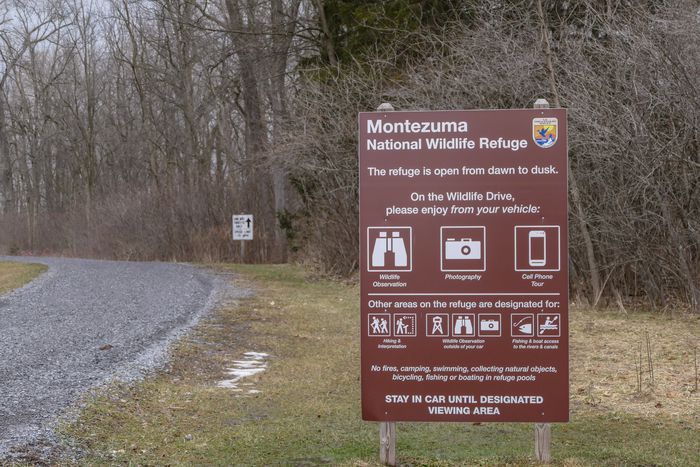
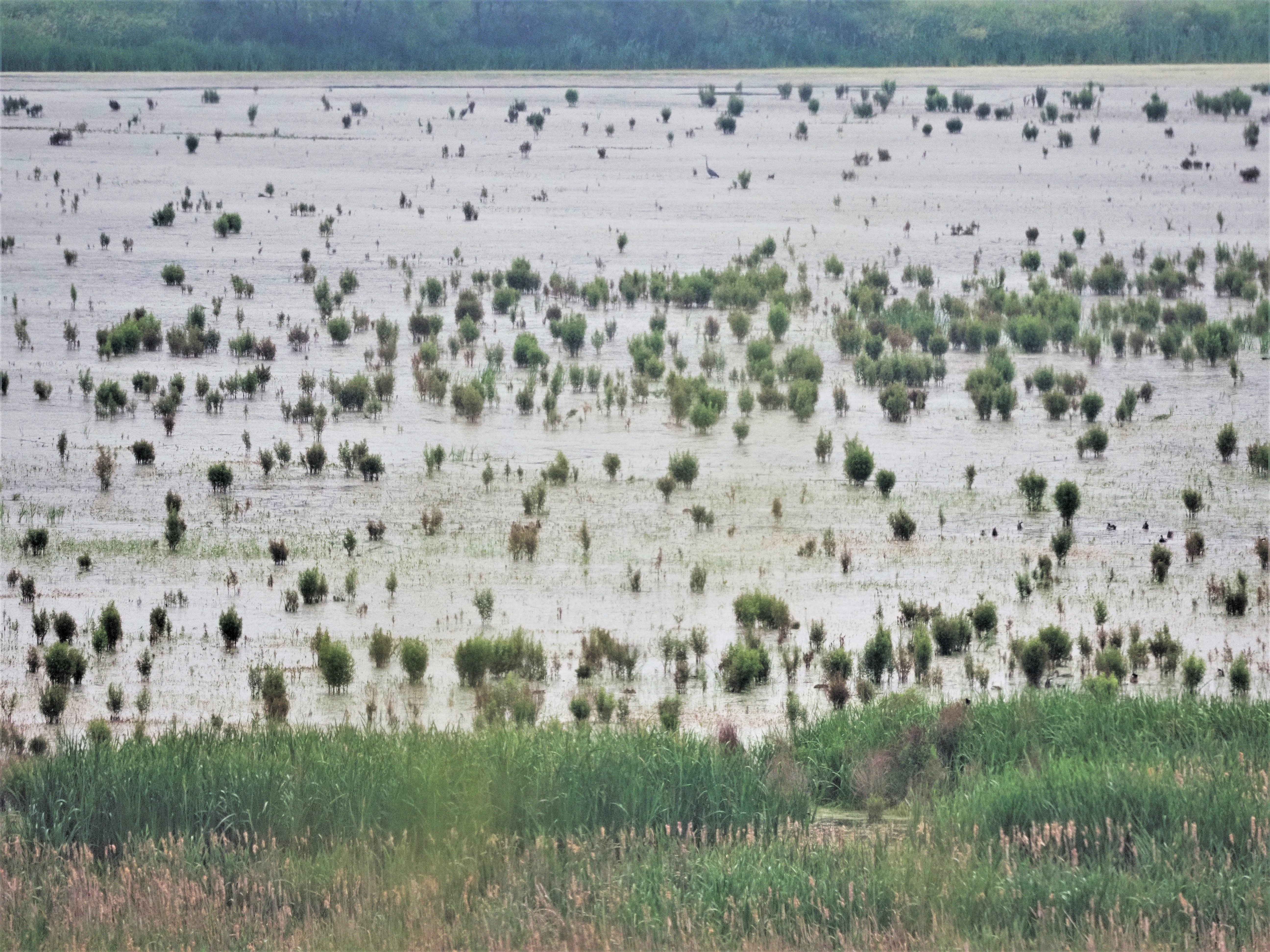
If current practices persist, this name change would certainly be warranted. For the past three years (2018-2021) each of the pools here have been groomed for a single purpose — to create a habitat for ducks — as well as geese and swans but primarily ducks. And only geese and swans but primarily ducks. So, in early spring the pools are drained down to the bottoms to expose mudflats that lie fallow over the summer. As fall approaches, the flats are gradually refilled to submerge the vegetative cover that developed over the summer. Now we await the hyperpopulation of ducks to arrive as they migrate down the Atlantic Flyway to a more conducive winter climate.
Never mind that this process eliminates the food web that had supported a variety of resident wildlife.
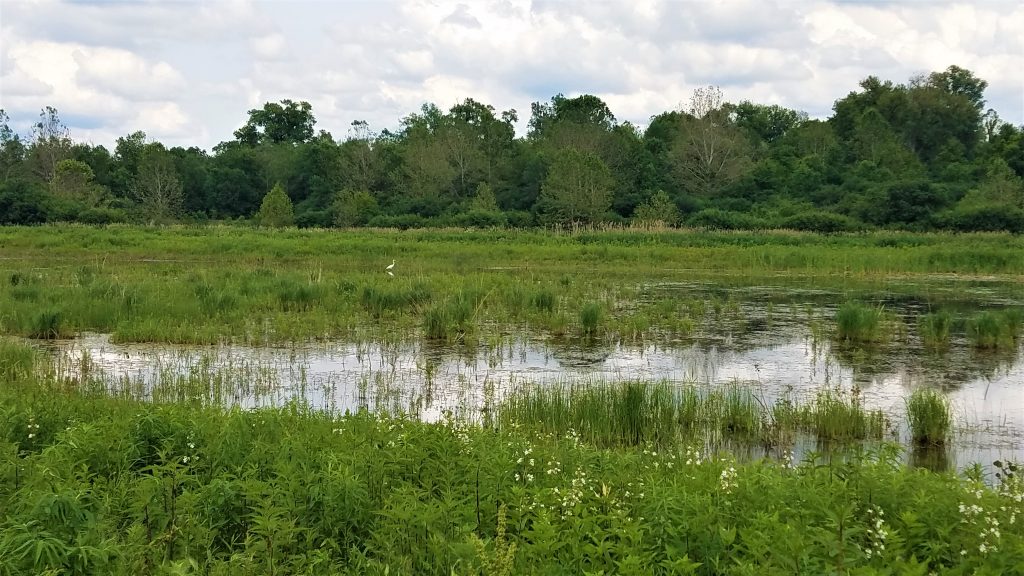
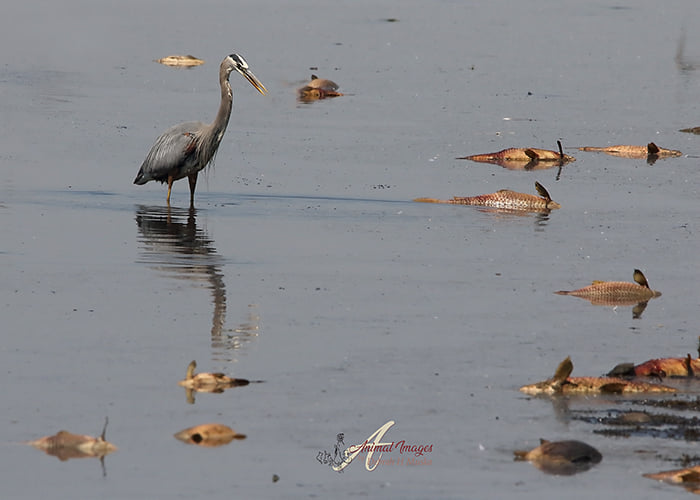
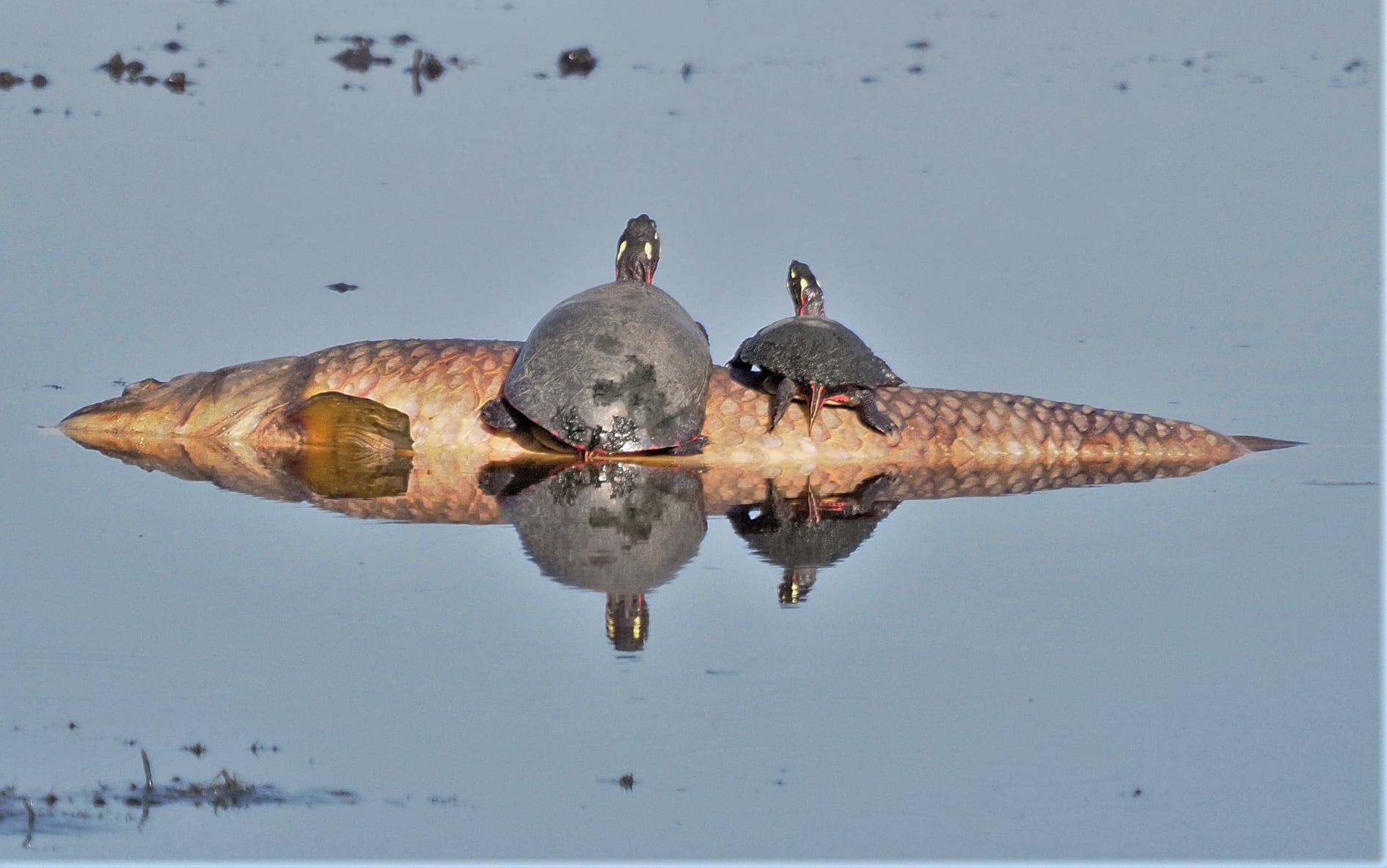
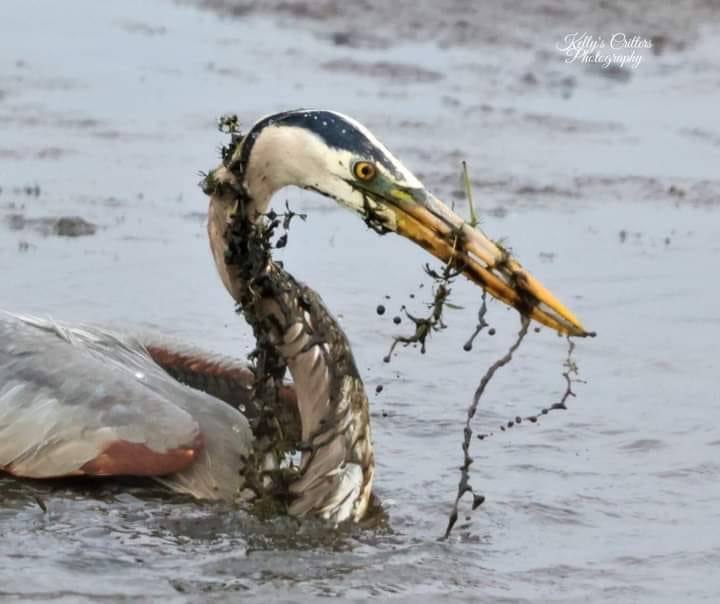
That is the more severe of the two problems associated with this policy. The fish, amphibians, turtles, and other water-dwellers form the food chain upon which the entire web is built. The wildlife we are so used to seeing — most commonly herons, egrets, rails, beaver, muskrats, eagles, osprey, and kingfishers (there are others as well) — depend upon this for sustenance. But when a single chain is destroyed, the entire web collapses. As the marshes drain down to mudflats the fish and other water-dwellers are trapped in habitat loss. They shrivel and die. The birds and other animals dependent upon these fish face starvation, unless they find an alternate food source (those who don’t will perish). Visitors (and donors) riding along Wildlife Drive no longer observe wildlife, because at the time of this writing (May 24, 2021) there is no wildlife to observe, just long stretches of mudflats littered with the odoriferous bodies of decomposing fish.
Andrea van Beusichem, Visitor Services Manager at MNWR, explained the pool drainage strategy to readers of the Friends of Montezuma National Wildlife Refuge Facebook page. Even though she believes that “[b]iological diversity leads to a healthy ecosystem” she admits that the drainage has a single restrictive purpose. “[It exposes the marsh bed] to the warmth needed for plant growth (by “plant growth” she means duck food). Rather than express concern for the heartless elimination of the fish-based food chain, Ms. van Beusichem evidently believes that the carnage affects only carp, an unwanted and invasive species. “[T]he dead carp are being eaten by migratory birds. . .their carcasses are consumed by bald eagles. Carcasses will also by eaten by turkey vulture[s], another migratory bird.”
Ha, wishful thinking. Direct observation of the extensive mudflats comprising what were once wetlands now feature the remains of dead fish and other water-dwellers, and the litter remains largely untouched. Even though many photos are posted on Joseph Karpinski’s Facebook site, Birds of Montezuma National Wildlife Refuge, only two show eagles pecking at the carcasses, and there was a single 30-second video (now removed) of two turkey vultures riding the thermals, but nothing that shows them feeding on the flats. However, there are multiple other depictions of great blue herons and egrets ignoring the carrion surrounding them while they search in vain for live food.
Yet Ms. van Beusichem continues to dismiss the fish kill and its consequences. The droughts, she explains, simply “mimic the natural [weather] cycle.” The carp are not slaughtered, they are “managed.” These benign policies, she states, are necessary to “rejuvenate the marshes” to “allow new plant growth” (again, she means duck food). And therein lies the problem.
Carp aren’t the only fish “managed” by the “rejuvenated” wetlands. Drying up the wetlands and choking them with plants cause ALL the fish (and other water-dwellers) to die. It collapses the entire food web. The wildlife flee to find new fishing grounds elsewhere, but those who do not will starve to death.
My questions are, why the intentional destruction of a multifocal ecosystem that kills and/or drives wildlife away? Why limit these acres of marshes to just ducks?
There are two reasons why I’ve gotten no answer. The first (and most obvious) is that Ms. van Beusichem can’t provide an answer. According to her Facebook page, she is a functional nutritionist, a bootcamp-style coach, and a certified turbo-kick live instructor, all of which is quite admirable, but she lists no training in biology, ecosystems, or marsh management. So, she is a spokesperson, not a scientist. “Anything that has to do with the public at the Refuge, I deal with.” S0, she is told what to say — for public relations purposes only.
The other, less obvious reason is that she won’t provide an answer, and this is the second problem created by this environmental manipulation — New York’s hunting season, which is scheduled to occur simultaneously with the fall migration.

It’s a problem because MNWR partners with a corporate contributor whose vision for the Refuge is a duck-only environment. Ducks Unlimited identifies as “the world’s largest nonprofit organization dedicated to conserving North America’s continually disappearing waterfowl habitats.” Their focus is ducks — not herons, not eagles, and certainly not any other fish-eating species. They are interested only in ducks and duck habitats. Period.
Well, maybe a goose or two on occasion, but you get my point.
Ducks Unlimited has provided both labor and financing to the Montezuma Wetlands Complex, which includes, according to the New York Department of Environmental Conservation, the approximately 10,000 acres comprising The Montezuma National Wildlife Refuge as well as its Visitor Center. So, while draining the pools at MNWR may kill water-dwellers and drive other wildlife away, it also pollutes its access road with noxious odors, dead fish, and unlimited views of mud. But it delights the members of Ducks Unlimited, who anticipate lush duck-attracting vegetation come duck-hunting season in the fall. I have no doubt that these duck-only policies will foster a long-lasting partnership between Ducks Unlimited and MNWR.
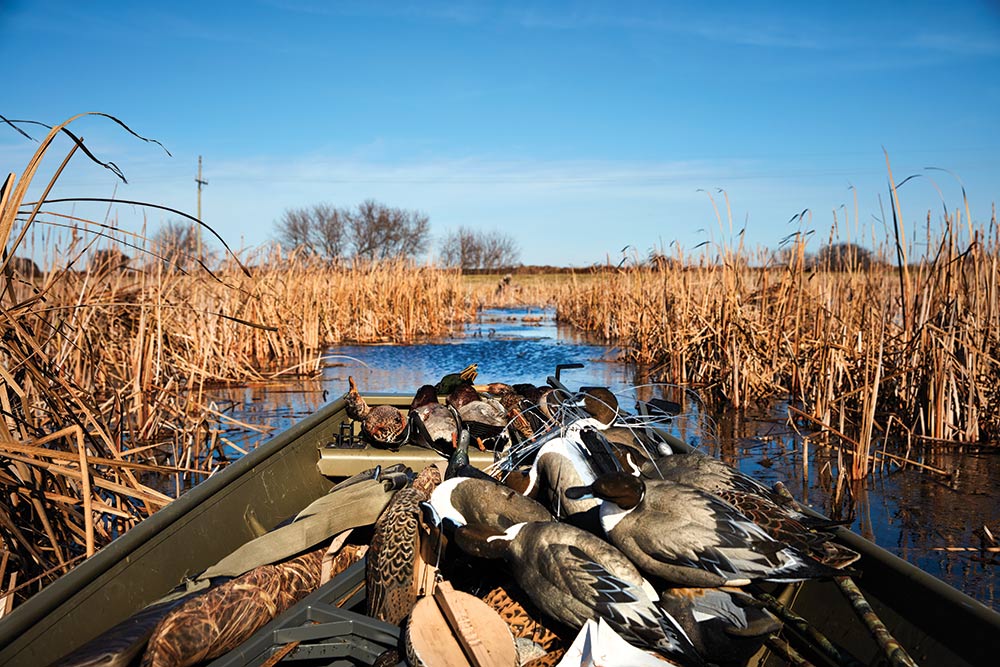
Montezuma National Wildlife Refuge is not the only national refuge to allow duck hunting. But it’s the only national refuge (to my knowledge) that maintains an active duck-food farm to lure ducks there. With bait. At a refuge — which by definition is a safe place for wildlife. While this practice may be a holdover from a 1930s philosophy, it is important to note that it isn’t 1930 any longer. Today, in 2021, the US Department of the Interior defines the term “national wildlife refuge” without even mentioning hunting — and for good reason:
A national wildlife refuge is a designation for certain protected areas that are managed by the U.S. Fish and Wildlife Service. These public lands and waters are set aside to conserve America’s wild animals and plants. On top of that, they provide enjoyment and beauty, and they demonstrate shared American values that support protecting and respecting living things.
National refuges, then, according to this definition (https://www.doi.gov/blog/celebrating-national-wildlife-refuges), have a dual purpose: 1) to manage the “public lands and waters [that] are set aside to conserve America’s wild animals and plants” (not just ducks), and 2) to provide opportunities for the public to observe and enjoy how our tax dollars are used in “protecting and respecting the living things” under their control. I fear these facts are lost upon MNWR officials, whose public duty seems to be restricted to providing quid pro quo to a self-interested financial partner. In any event, the hunters’ magazine Field and Stream ( https://www.fieldandstream.com/breaking-ice-mallards-on-montezuma-national-wildlife-refuge/), explains the policy that Ms. van Beusichem fails to address. Referencing MNWR specifically, we are told that
This patchwork of 10,000 federal acres is the first U.S. layover for more than 1 million Atlantic Flyway waterfowl on their fall migration south. Open to duck hunters every Tuesday, Thursday, and Saturday during the season, Montezuma requires a reservation, made three days prior to your hunt day.
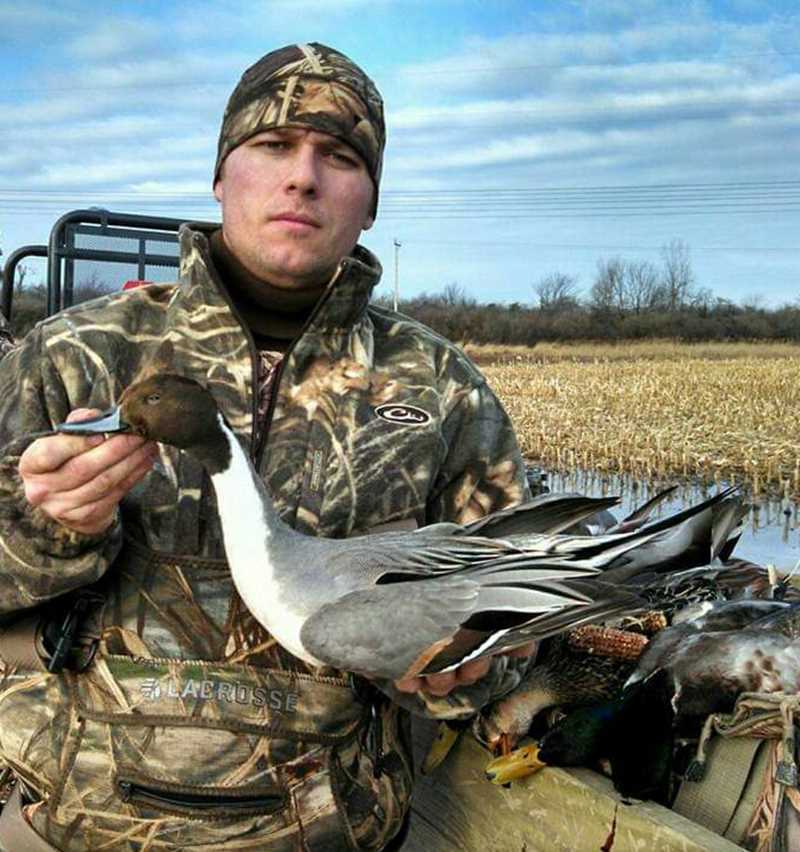
The dictionary definition of “conserve” is “to protect. . .to keep in a safe and sound state,” and Ducks Unlimited claims to be an organization of “conservationists.” However, they boast that “the majority of its members are hunters,” and they defend duck hunting, which they prefer to call “harvesting,” in unequivocal terms:
Wildlife management, hunting, and habitat conservation in North America are interdependent, and Ducks Unlimited, Inc. strongly supports hunting. The financial contributions of hunters and recreational shooters, through mechanisms such as their hunting licenses and excise taxes on sporting arms and ammunition, provide the foundation for conservation funding. . .
https://www.ducks.org/about-ducks-unlimited/du-position-on-hunting
I’m not sure how I feel about hunting. Certainly in times of natural overabundance, a quick death due to a shot in the head is more merciful than a slow, agonizing wasting due to hunger or disease. However, I am very sure how I feel about hunting on a REFUGE, where innocent wildlife, in this case, ducks, are lured to feed and rest, only to become “fair game” to hunters who 1) consider it “recreation” to shoot them and 2) pay inter alia licensing fees for the privilege. This is hardly “fair game.” It is patently unfair, mercenary, and rather disgusting.
We don’t know how Ms. van Beusichem or MNWR feels about this issue. They both remain silent.
Instead, the public relations focus continues to be that periodic drainage “replicates nature” and is necessary for the health of the marshes. The elimination of the fish habitat in favor of providing acres of duck food promotes “biological diversity.” And, of course, Ms. van Beusichem has already told us that “[b]iological diversity leads to a healthy ecosystem.” It is my opinion that anyone who believes there is “diversity” in a duck-only habitat certainly doesn’t know the meaning of the word. And if we are to believe her when she assures us that swarms of turkey vultures and eagles will clear up the dead fish component of this “healthy ecosystem,” then we must disbelieve our own eyes. And noses. (And what about the absent herons and egrets and eagles and muskrats and. . .?)
In fairness, she does offer an apology of sorts:
We have to make choices. Based on mandates and missions, those choices use the best science available to create, enhance, protect, and monitor habitat for federally threatened and endangered species (none currently exist on the refuge), migratory fish (none currently exist on the refuge), and migratory birds (about 300 species exist on the refuge).”
An apology, that is, only until you realize that she just about quotes the BASI mandate of the Migratory Bird Treaty Act (1918), which was designed to protect wildlife. It does not encourage practices that kill them or drive them away, and it certainly does not support habitat elimination.
But I digress.
So, not only are we asked to ignore harsh reality, we are to be comforted by the fact that the Refuge uses “the best science available” — not to protect endangered species (none currently exist on the refuge) but instead to create a landing zone for fall-migrating ducks, which are then targeted and killed by any duck hunter with enough money to pay the requisite licensing (and other?) fees and enough smarts to make an advance reservation.
I wonder — if another duck-hunting season was scheduled to correspond with spring migration, would MNWR devise a food program for that? Asking for a friend.
It always makes me sigh when the destruction caused by human interference is defended by claims of “best science available” and “best interests” of the wildlife. But it makes me furious when marsh managers overuse standard maintenance practices, in this case water elimination, to manipulate the emergent marsh environment they claim to protect.
I fear MNWR intends to maintain their wetlands in a more-or-less permanent vegetative state — with only brief periods of respite to allow the marshes to recover before repeating the cycle once more. I wonder if they consider the wildlife that use these respites to rebuild the food web a nuisance — or maybe just a transient interruption easily eliminated by the next drawdown. . .

It’s important to note that water level reductions do have a place in maintaining a reclaimed emergent wetland, as long as they conform to a scheduling standard (currently set at once every 5-7 years) that meets weather and other environmental conditions. Such standards are taught at universities and are described in the USFWS Wetland Management for Waterfowl Handbook (yes, the same USFWS that co-manages MNWR). Wise use of standards would not require annual (or nearly annual) drainage, and complete drawdowns would be a rarity conducted only to remediate a specific problem. But standard practice is not the subject of this essay because standard practice is not the problem. The problem is overusing standard practice for purposes other than maintenance. Like, for destroying multiple wetland habitats in violation of a public duty to preserve them, simply because your business partners like to shoot ducks, just sayin.
Anyway,
I doubt that this kind of manipulation is healthy for any marshlands. Michigan State University, which produces the state’s Natural Features Inventory, tells us why: A too-frequent drainage cycle, natural or otherwise, “allows woody plants [shrubs and trees] to establish and eventually replace emergent marshes. This is happening right now at Knox-Marcellus (see above) in spite of — but more likely because of — the joint efforts of the Montezuma Complex and Ducks Unlimited. Evidently they are quite proud of this “achievement” (don’t believe me? then read the brass plaque on the boulder in the parking area).
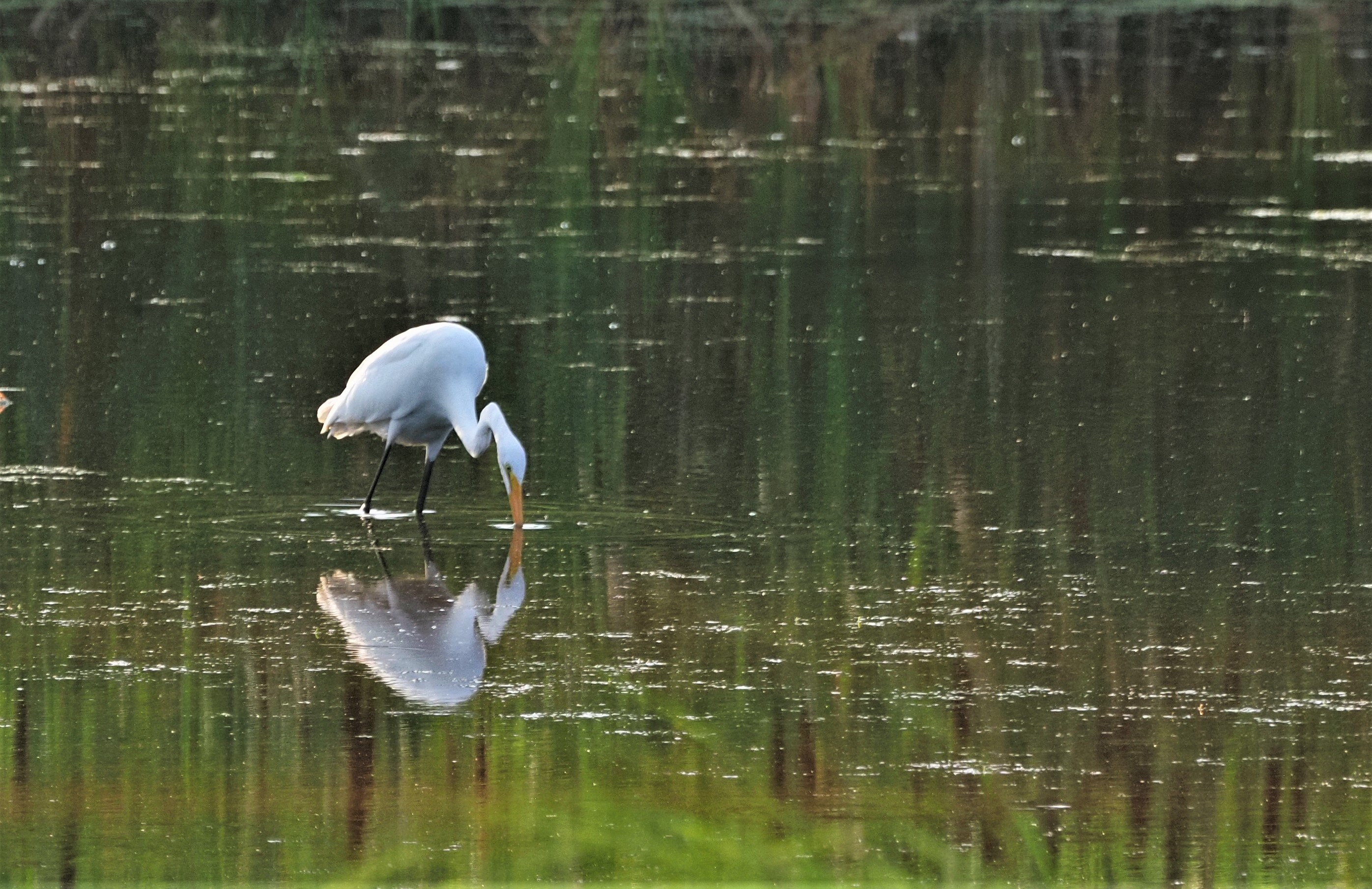
Furthermore, University studies state what should be obvious to anyone with an interest in preserving wetlands, and that is “[e]mergent marshes flood seasonally, especially in the spring.” Such flooding provides, among other things, “. . .spawning grounds for fish.” Instead of encouraging a multi-habitat fish-based ecosystem, the MNWR managers choose instead to do the exact opposite with their drainage policy.
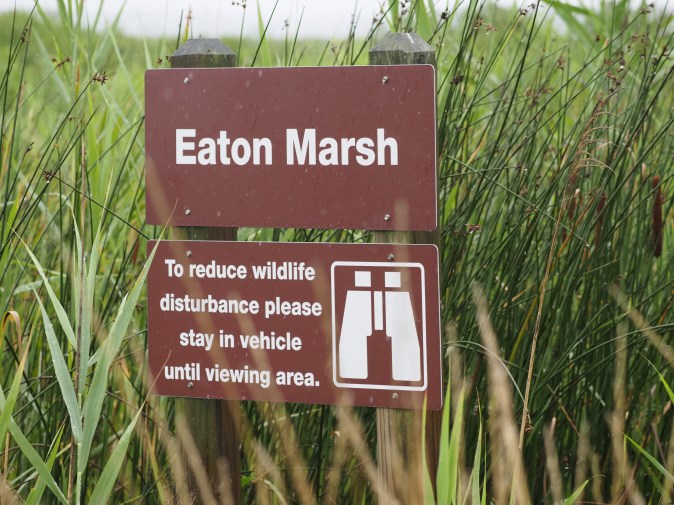
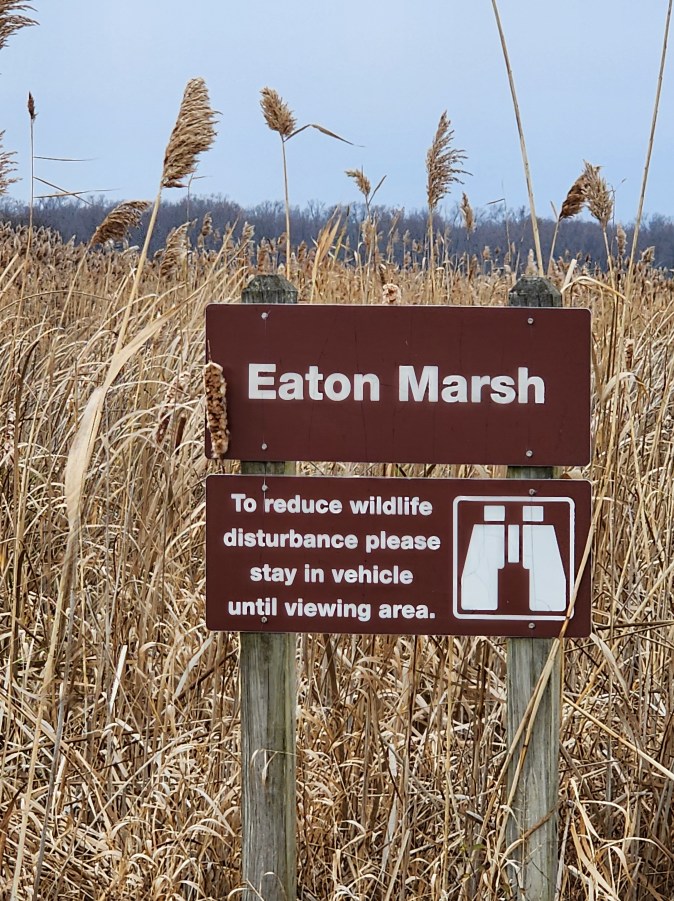
And it’s not just Michigan. The aforementioned USFWS Handbook identifies “undesirable species” that “may become dominant. . .after repeated annual drainage.” They predict such growth will “create problems. . .when flooding is regular” (remember, regular draindowns require regular flooding). Again, this is happening right now at the Eaton Marsh, where invasive phragmites grass is a problem.
In any event, here in the northeast droughts run in a more-or-less 5-7year cycle and are most likely to occur in the early summer. Postponing drawdowns only to those occasions when nature fails to provide one would make sense, but I suppose it would disturb the cycle of duck-food farming, which has no set cycle but occurs whenever MNWR thinks it should. But it’s worth considering this advice from the USFWS, since limiting drawdowns would create less mudflats and thus reduce the opportunity for invasives like phragmites to thrive.
Is the Flyway limited to ducks? It will be if MNWR and Ducks Unlimited have their way. As I write this, the fish-eating portion of the claimed 300 species of migratory birds are fleeing the Refuge, a recognized Flyway pit stop, because their habitat has been eliminated in favor of ducks.
And it stinks.
It doesn’t have to be this way. Duck habitats can and do exist in multihabitat environments — just take a look at the Iroquois NWR in Basom, NY, where there are no attempts to skew the natural wetlands habitats in favor of ducks. MNWR could do this, too — but first they would have to have a serious talk with DU and then read the USFWS Handbook. In 2007, readers discovered that “[p]ublic interest and pressure are gradually shifting toward enhancement of more natural habitats and multi-species management,” which has certainly proven true since 2007. And since “h]erons, rails,. . .and upland game birds and mammals. . .concentrate on moist-soil sites,” refuges like MNWR, where “several moist-soil impoundments [are] available,” are advised that multiple habitats can coexist if “[e]ach impoundment [is] managed individually for different types of wildlife,”
But they aren’t. Not at MNWR, anyway.

Maybe they should just rename the refuge, “Montezuma National WATERFOWL Refuge, because that is what it is.
An update, May 27: The controversy is over, at least on Joseph Karpinski’s Facebook page, Birds of Montezuma National Wildlife Refuge. He has quelled any further discussion by removing anyone who does not subscribe to the drainage policies (me) espoused by Ms. van Beusichem along with another poster (Alyssa Johnson) who perhaps too vehemently defended her and her public relations statements. These actions were duly acknowledged by Ms. van Beusichem, who thanked Mr. Karpinski “for allowing me to explain refuge management to you all.”
Well, at least the smell is gone.
The mud flats now (mid-to-late June) sport a thick covering of grassy vegetation, thanks to the fertilizer provided by mounds of dead fish, and re-flooding the main pool will likely begin in late August, thus producing the desired duck-only environment just in time for their fall migration southwards — hopefully they will survive hunting season.
However, facts remain facts. Despite the public relations hype, this process is a misuse of legitimate wetlands maintenance that does not “replicate nature” or promote biodiversity; instead, it eliminates diversity by destroying the food web with fishkills that cruel and tortuous to all water-resident species, not just invasive carp. And for what purpose? — so they can sponsor seasonal duck kills every Tuesday, Thursday, and Saturday and thereby collect a good portion of Federal Duck Stamp dollars.
Well, that’s just a big, fat lie. Duck Stamp dollars are not distributed according to how many ducks a refuge provides for DU hunters. They are distributed as grants to those who have a good reason to apply for them.
In any event, managers at the aforementioned INWR, which also lies along the Flyway, do not drain their wetlands down to mud, they do not drain them frequently, they do NOT encourage a duck-only monoculture, and they do maintain a diverse and natural wildlife habitat — and they STILL qualify for Duck Stamp money. Who knew!
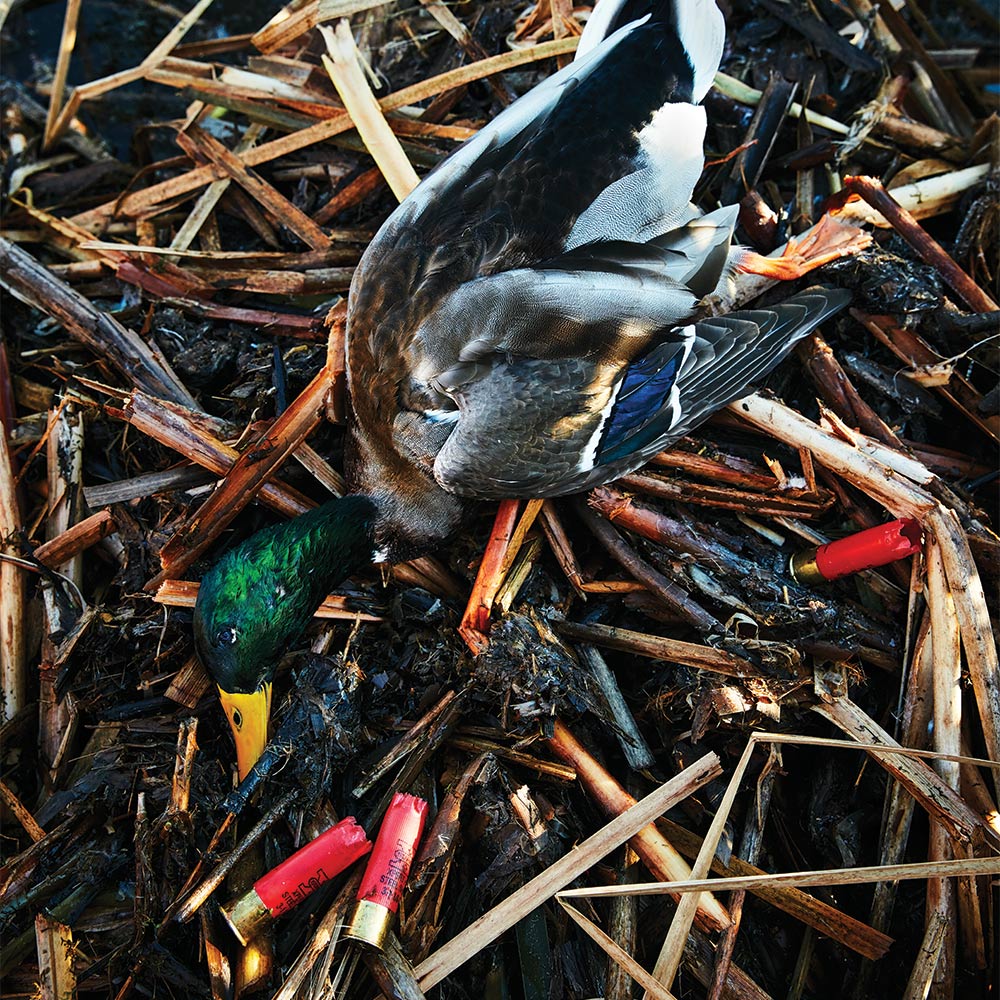
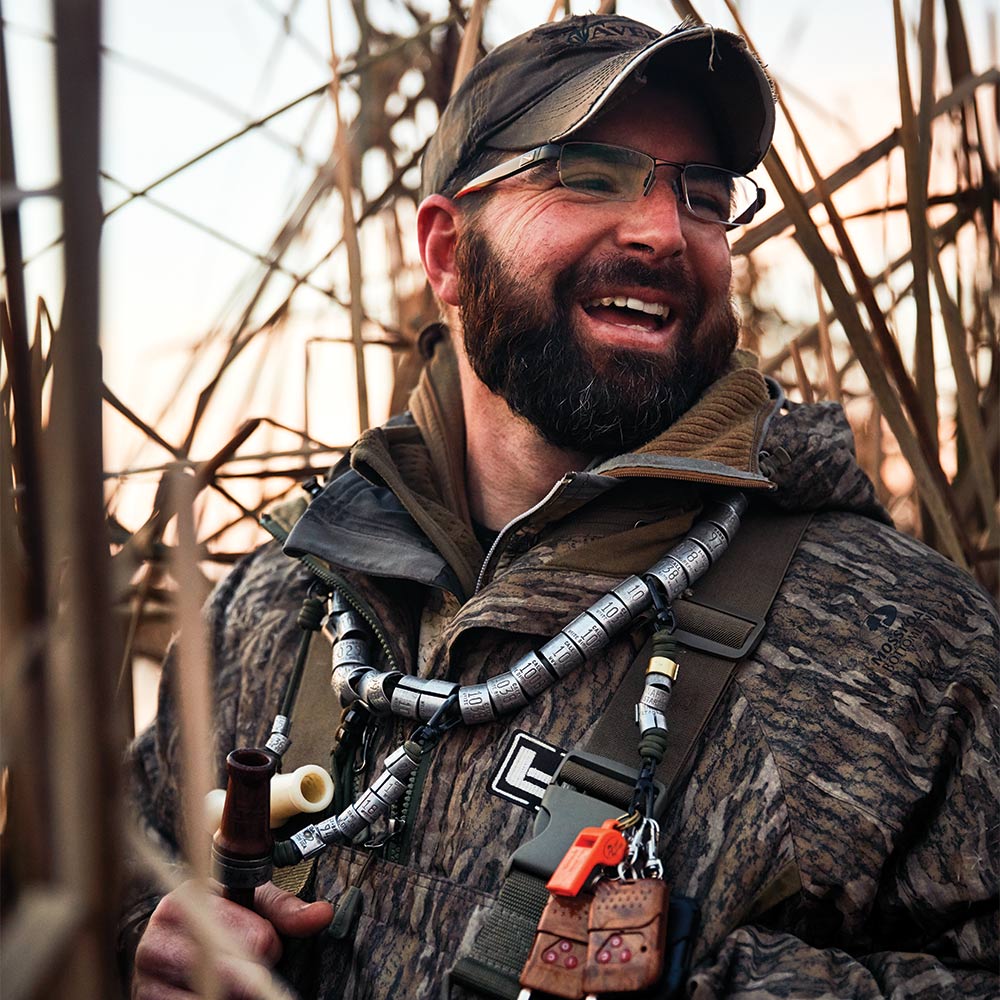
It’s not just ducks. Geese, including snow geese, as well as land animals (turkey, deer, rabbit, and squirrel) are all considered huntable game at the Refuge. Does the Refuge make money on the kills it allows on its property? Are hunters charged a fee for their permits — beyond, of course, the mandatory yearly purchase of the Federal Duck stamp? Does MNWR charge a fee-per-pound for every dead animal?
If they don’t, they should.
The Montezuma National Wildlife Refuge is free to pursue their agenda, despite the damage it causes. There is nothing I (or anyone else) can do except speak for the wildlife that cannot speak for themselves.
(May 24, 2021, updated July 1, 2021 and February 9, 2026)


 Seen by Susan: Fun with Flora and Fauna


Thank you for your comment. I have a six-year degree (education), advanced experience in history, and I am a published author. I am familiar with both MNWR and its history including the restoration work that was done in the 30s-40s.. You admit that the turkey vultures you saw circling the mud flats that used to be the main pool weren’t feasting on carp; when they fly in circles like that it’s called “riding the thermals.” Turkey vultures “gain lift from thermals, [which are] hot air drafts rising from the earth. When this thermal dissipates they will soar downwards reaching speeds of 60 mph until catching the rising air of another thermal draft. These thermals will continue to elevate the vultures high into the sky where wind currents will take over allowing them to soar effortlessly for hours.” (https://wildbirdhabitatstore.com/uncategorized/353-turkey-vulture) Of the “14+ turkey vultures circling above the main pool,” you state that “[n]one were necessarily diving for carp,” but even if they were, they would not put a dent in the large number of dead fish littering the mud flats. The BOP may indeed utilize the pool “on the other side,” but only if it supports a fish ecosystem — does it?. I agree that Andrea is trying her best and that she has indeed explained very clearly what is occurring and why it’s happening. I understand all of that. However, there is another side to this issue, and I am merely pointing out the damage being caused to wildlife other than ducks. I’m sorry if you think I purposely portray her as “uneducated and unprofessional” but those are your words, not mine. In fact, my words do not denigrate Ms. Beusichem at all — if you read the essay carefully you will see that she is represented solely by her own words, which I clearly document to the original sources. Yes, I agree that everyone is entitled to an opinion; furthermore, these opinions will vary. I fear that no one is attempting to understand mine; hence this essay. Of course, you and other readers are free to form your own opinions. Thank you for taking the time to inform me of yours.
LikeLike
Duck hunters pay for our Fed. Refuge system. Noncomsumptive users neèd to develope funding source so as to have a seat at the table. For years I have advocated for a tax on bird seed, field guides, binoculars, etc.
LikeLiked by 1 person
Actually, they don’t.
What they pay for are Duck Stamps. The money generated from these sales is deposited in the federal Migratory Bird Conservation Fund. This Fund is administered by the US Fish and Wildlife Service to the Department of the Interior for the specific purpose of buying land for use as migratory bird habitat. It does not go to the Refuges for general operating costs or maintenance of existing land. Each Refuge is free to apply to the DOI for a grant, but the money they receive must be used to acquire new land for bird habitat. It cannot be used for any other purpose.
This site explains how Duck Stamp funds are distributed:
https://www.fws.gov/program/federal-duck-stamp/what-we-do#:~:text=By%20law%2C%20proceeds%20from%20the,to%20acquire%20migratory%20bird%20habitat.
Instead, the National Refuge System is funded by the federal government. “Each year, Congress sets the amount of funding provided for the Refuge System’s operations and maintenance accounts through the U.S. Congressional Appropriations Process.” (https://wildlife.org/what-were-doing/refuge-system/e). That is the budget that supports the existing habitat and provides a general operating fund for care and maintenance but not for expansion. That, as I stated above, is what Duck Stamps support.
No need to tax binoculars, bird seed, field guides, etc. because they are already taxed. The sales taxes they generate mostly go to each state’s general fund. Whether any of these proceeds are used to fund national wildlife refuges or any other nature endeabor is, of course, up to each state.
I have no problem with hunting, as long as it is done responsibly. What I do have a problem with is luring animals (such as waterfowl) to a refuge so they can be shot to death. By definition a refuge provides “a safe or sheltered [place, free] from pursuit, danger, or trouble.” (Oxford English Dictionary). Luring wildlife to MNWR, in my opinion, is made doubly worse because it lies within the Atlantic Flyway, which means that large numbers of migratory birds and waterfowl will likely spend time resting at the Refuge, only to be shot by any hunter who makes an appointment to do so within NY’s duck-hunting season.
Why is this not considered baiting? “The law prohibits hunting if bait is present that could lure or attract birds to, on, or over areas where hunters are attempting to take them.” (US Fish and Wildlife Service). Hunters must follow this rule, yet MNWR violates this policy every year on a very large scale by draining the various marshlands under their control in order to grow lush vegetation that ripens just in time for hunting season. This, in my opinion, is unconscionable.
Plus, a terrible side effect of annual marsh drainage drives the resident wildlife away due to habitat elimination.
Thank you for reading my blog and sharing your opinion with me.
LikeLike