by Susan

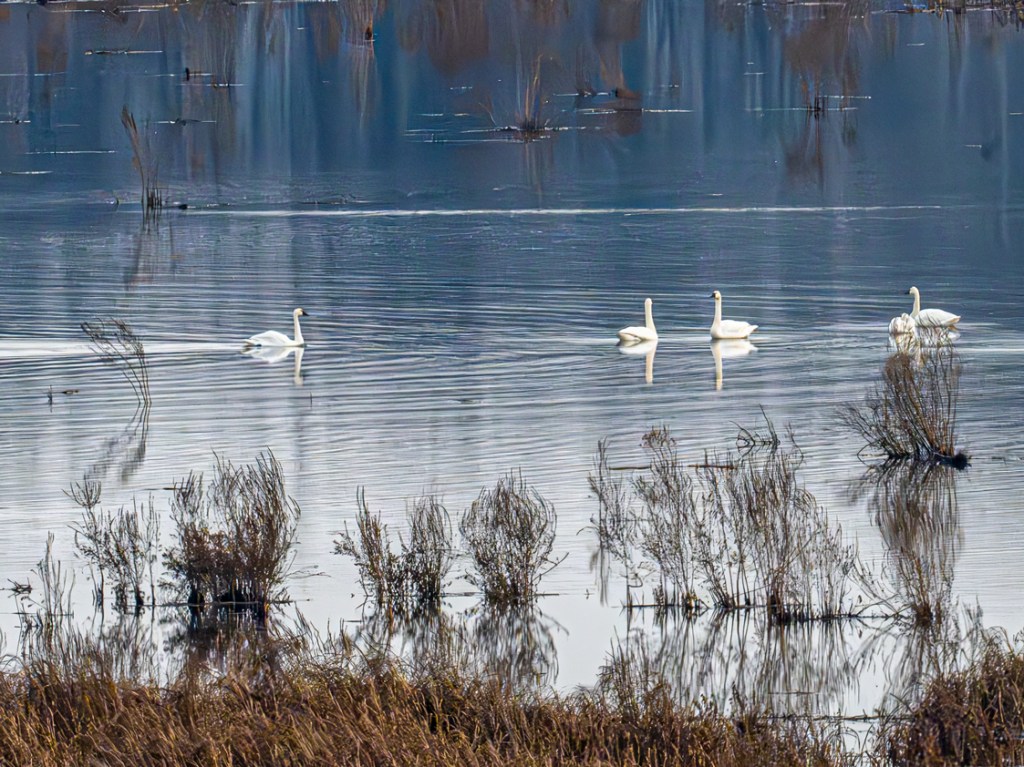
Apparently little has changed since 2017, when the Montezuma National Wildlife Refuge thought it might be a good idea to devote each spring and summer to cultivating vegetation, hoping to attract large numbers of waterfowl to the refuge during the fall migration. Sounds good on paper perhaps, but in practice this creates a wildlife nightmare. In order to provide sufficient acreage for their duck-food garden, the wetlands are drained down to mudflats, killing off the water-dwelling fish, amphibians, and reptiles in the process. With the aquatic food chain destroyed, the food web collapses, and the resident wildlife that depend on it are driven away. The number of ducks lured to the refuge by this tactic will vary each year, but those that do show up arrive just in time for New York’s duck-hunting season.
I wrote about this back in 2021, and despite the uproar it created MNWR continues maintaining their duck-food garden. However, now they forewarn us via the US Fish and Wildlife Service website. The drawdown that’s coming, we are told, “refreshes the marsh.” It’s done once “every 5-7 years” in order to “maintain habitat for migratory birds and other wildlife” No wildlife are harmed because “[w]e only drain one large pool at a time.” Finally, “[w]hile it may inconvenience wildlife observation opportunities” and collapse the food web, the animals are never really in danger because they “will find suitable habitat” elsewhere.
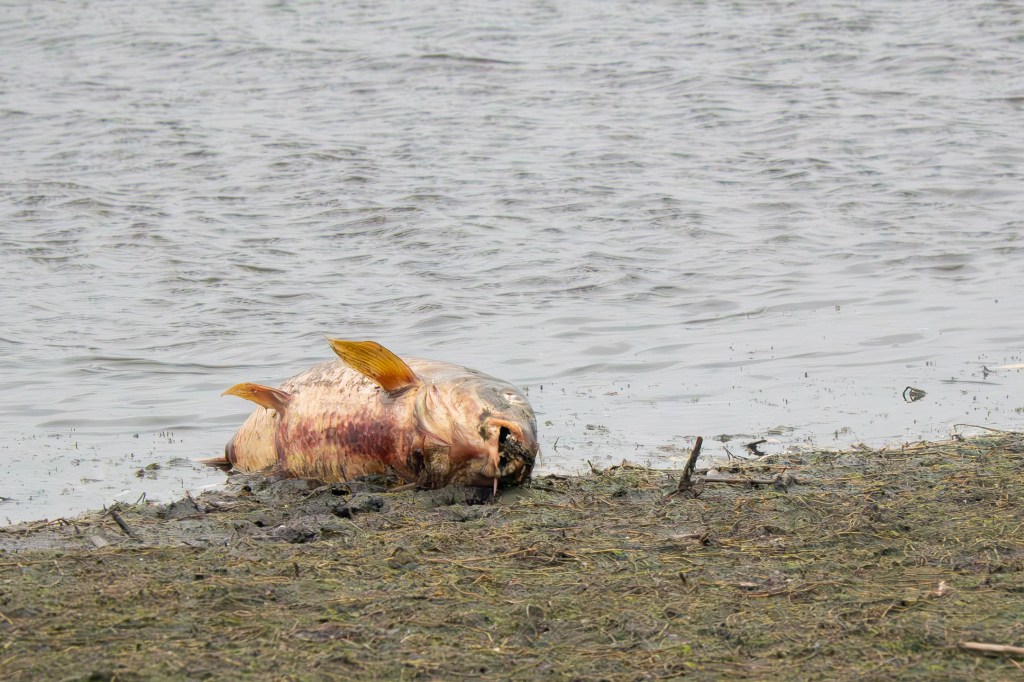
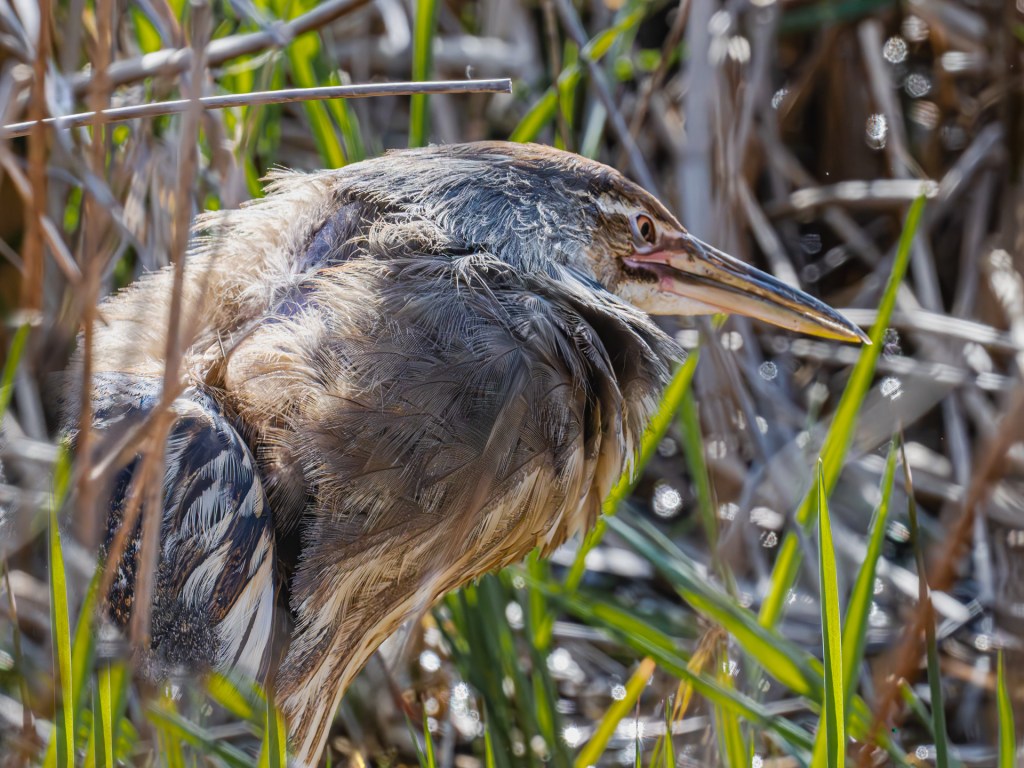
Personal observation pokes holes in this story. In the 7-year period between 2018 and 2025, there have been several drawdowns, none of which has “maintained” any habitats — if they did, there would be no “lost observation opportunities,” no food web destruction that kills some wildlife and forces others to flee, no carrion littering the landscape, no contradictory photos (see below), and there would be no cause for this essay.
And, while they claim to limit drawdowns to “one large pool at a time,” they don’t acknowledge that there is only ONE “large pool” to drain. How do you sequentially drain a single pool?
Apparently, someone over there lies like a Republican press secretary. . .but in true press secretary fashion, logic is dismissed as a momentary unpleasantness that disappears with a few harsh words and a vigorous denial.
Anyway, I respectfully call bullshit on that entire waste of bandwidth.
I began visiting Montezuma in 2017, when there was appreciable water in all the pools. Not so in 2018, when I witnessed my first (and likely their eleventy-seventh) drainage. MNWR’s scheduled 5-7 year drawdown cycle corresponds to NY’s natural drought cycle. This makes marsh drainage (including complete drawdowns) unnecessary unless nature fails to produce drought within that 5-7 year cycle. This present (2025) drawdown — taking place in the middle of a natural drought — and is disturbing. The fact that MNWR has induced additional droughts within that same 5-7 year schedule is even more disturbing.
Whenever I ask about the dried-up marshes, the explanations vary from “to simulate drought” (yearly?) to “to control the invasive carp” (which are controlled by a canal gate) to “the canal gate needs repair” (this one I’ll give them — once) and finally “we need vegetation to feed the ducks” (ding ding ding, we have a winner, folks!). Just a couple of weeks ago, a USFWS employee added another reason, “to control the phrag[mites] grass.” A curious response, since lowering the water table to zero creates acres of wet and wasted mudflats upon which phragmites thrive.
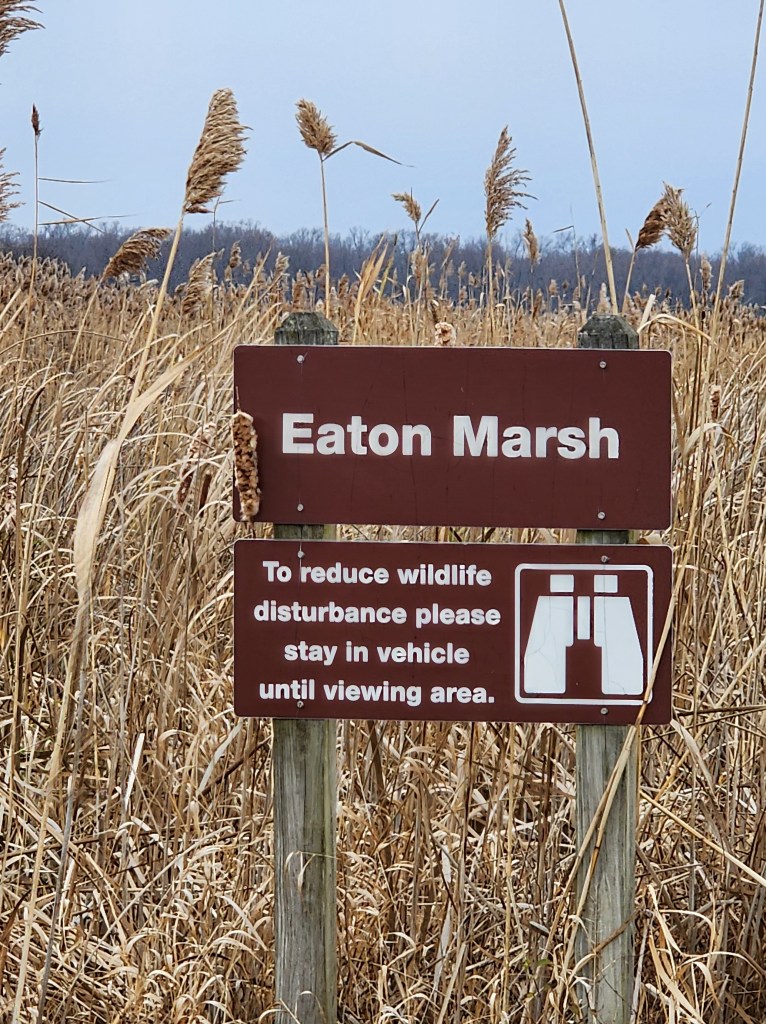
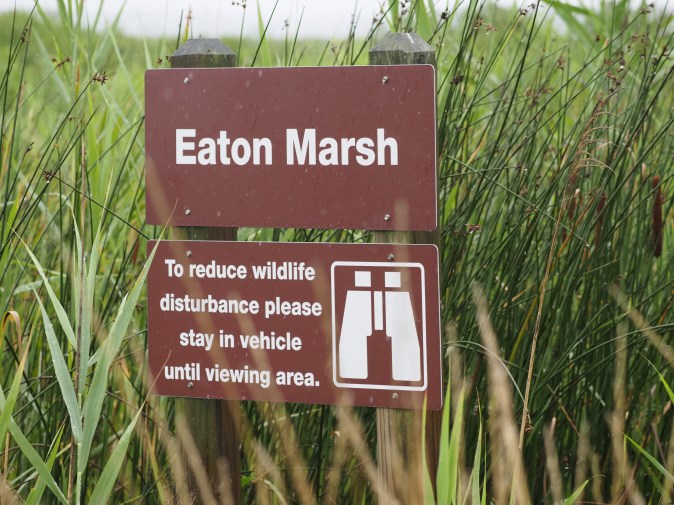
In fact, the current standard of control is outlined in A Guide to the Control and Management of Invasive Phragmites ([Michigan] Department of Environment, Great Lakes, and Energy, 2014). Since P. australis is highly invasive and difficult to control, wetlands managers are advised to avoid practices that encourage its growth:
“Traditional moist soil management, in which impoundments are drawn down to produce mud flats in early summer, may encourage growth of Phragmites.”
Well, duh. Furthermore,
“If Phragmites is on-site or in the surrounding landscape, managers should use caution when timing drawdowns. Drawdowns should be conducted in late summer (late July) to maintain and promote native vegetation and to avoid reestablishment of Phragmites.“
(. . .even if it messes with the duck food cycle, just sayin.)
The worst of these drawdowns, in my opinion, occurred in 2021, when the levels were reduced so rapidly that the water-dwellers died in a very short period of time. Rotting carcasses extended across Wildlife Drive, and the stench was unbearable. That’s when I decided to research which one of these answers, if any, were valid and then write up my findings (published elsewhere on this blog).
In case anyone who denies the frequency of the drawdowns is also bad at math, the 4-year interval between 2021 and 2025 falls short of the “5-7 year” schedule MNWR claims to maintain, and this isn’t even counting the intervening drawdowns conducted between 2018 and 2025.
I don’t understand the how the managers “refresh” the pools “one at a time,” because they don’t. The dike system that controls water levels is located in the single large (main) pool. Whether by necessity or design, when the main pool dries up, so do the smaller pools and feeder ditches located along the Drive. There is no water anywhere. The fish food chain and the web it sustains collapse like a house of cards. There is no longer a habitat to maintain and no wildlife to maintain it for. The destruction covers the entire 3.7-mile stretch of Wildlife Drive, clearly obvious to anyone driving along the roadway.
Besides, it would be nice if they DID drain only “one [large] pool at a time,” because dedicating that single dried-up pool to duck food farming would keep the other, smaller ones filled with water to thus support the fish-eaters and waders.
But, I digress.
Anyway, don’t just take my word for it. Take a ride along the loop and see for yourself.

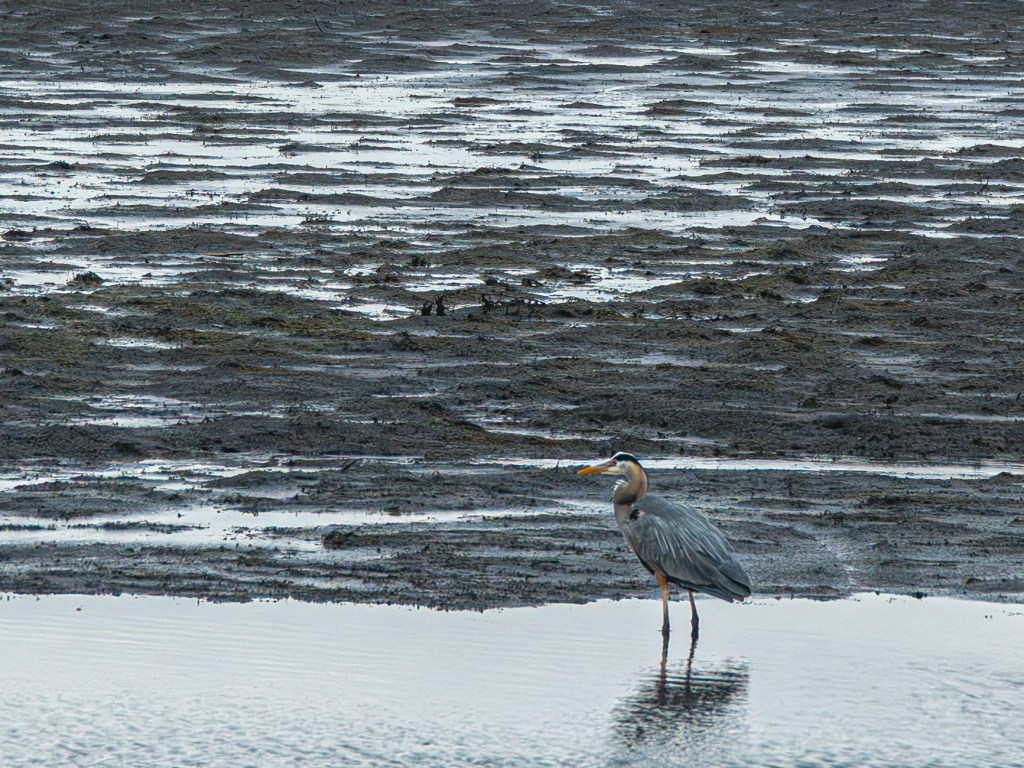
“Well,” you may ask, “what about the other side? Isn’t there water there?” Yes, there is. The Seneca Canal runs for the entire north/south length of the Drive. It attracts boaters and fishermen along with an occasional cormorant, a few eagles and osprey, and a kingfisher or two, but rarely a great blue heron or egret, and never ducks, yellowlegs, or other small birds. That’s because its relatively deep-water habitat and negligible shoreline are unsuitable for waders, divers, dabblers, and other wet-edge feeders that by instinct thrive in shallow-water marshes.
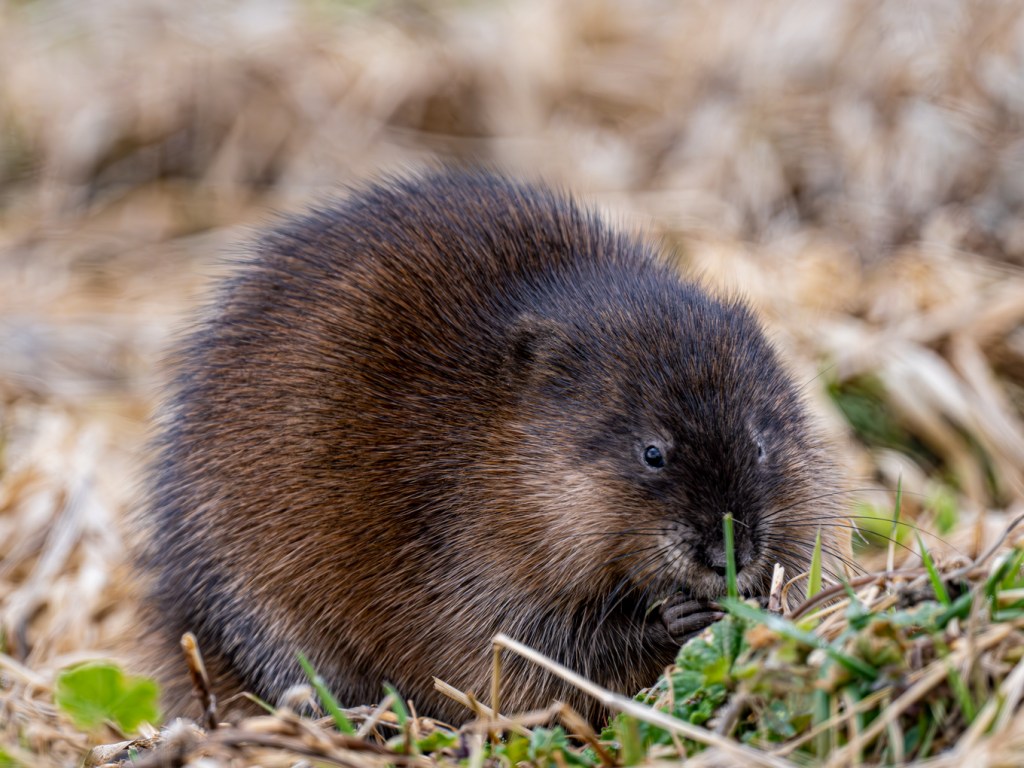
I took these photos (unless credited elsewhere) to show what happens when people in charge of managing a refuge don’t know what the word means, which the local USFWS defines as “maintenance of ] diverse habitats [that] give food, shelter, water and space to many of Central New York’s wildlife species.” However, this purpose is meaningless at MNWR as they periodically maintain a duck food garden in the mud, proving beyond doubt that when any one part of a food web is decimated, the rest of it is destroyed as well. Even though the USFWS asserts that “[w]ildlife on all National Wildlife Refuges comes first,” what they really mean is all National Wildlife Refuges except this one.
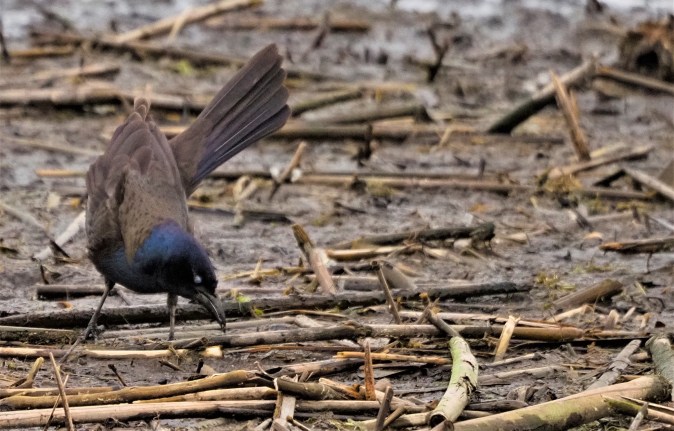
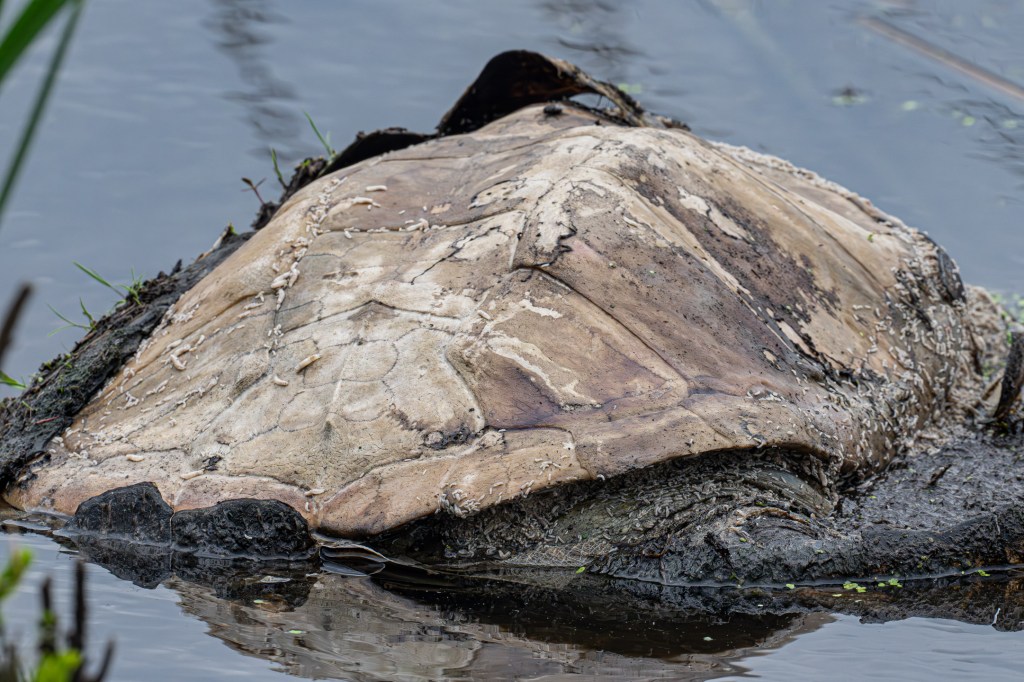
This begs two questions: 1) What is so important about attracting a hyperpopulation of ducks to the refuge each fall? and 2) How does this justify the destruction of the very habitats MNWR is tasked with preserving? Montezuma personnel have yet to acknowledge my questions, much less answer them. (“Simulating drought” is not an answer, it’s an overworked excuse).
I recently spoke to Logan Sauer, Resident Park Ranger and Visitor Services Manager at another NWR. The Iroquois National Wildlife Refuge faces the same problems that Montezuma faces — reclaiming and maintaining marshes from farmlands lying within the Atlantic Flyway. They also share the same environmental, geographical, and weather conditions, so one might expect their maintenance practices to overlap.
They don’t.
Mr. Sauer spent some time explaining the INWR marsh maintenance policy as essentially dictated by both established and predictive weather patterns. This is how the standard 5-7-year water-lowering cycle was devised (unlike the “duck food cycle,” which seems to occur whenever MNWR wants it to). The water tables at both refuges are controlled by a dike system that permits intervention at will. However (and this is important), it is done at Iroquois only when nature fails to self-correct. To date, partial drawdowns have been required on occasion but never annually, and when they do occur some water level is maintained. And they do drain only “one large pool at a time.”
What he is saying is that INWR maintains their wetlands according to the established standard of care, unlike MNWR, which manipulates their wetlands while overusing the established standard of care to produce a duck-hunter’s paradise each fall.
Of note, duck hunting is also permitted at INWR — but unlike MNWR, they do not partner with a self-interested donor, so there is no expectation of quid pro quo. None of INWR’s wetlands are groomed to produce duck-friendly vegetation to the exclusion of other resident wildlife. The ducks that are attracted to Iroquois wetlands are not artificially baited and thus are not exploited by either hunters, visitors, or refuge staff. That’s because the goal, according to Mr. Sauer, is to “maintain the diversity of habitats naturally present” in the wetlands (emphasis mine).
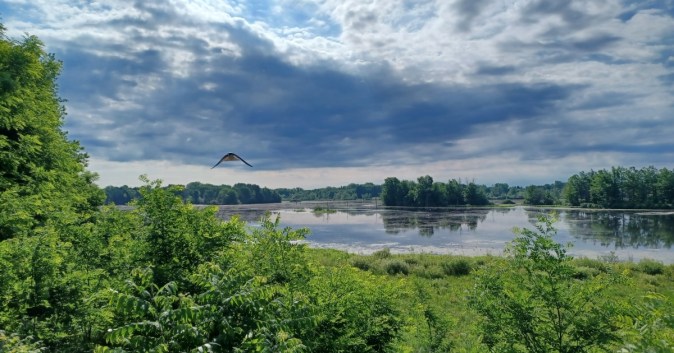
(Not discussed were the possible benefits of allowing the water table to regulate naturally once these farmlands are reclaimed, https://conservationevidence.com/actions/3198 . There just wasn’t enough time to do so.)
Sounds reasonable, doesn’t it? Except when it falls from the face (or the keyboard) of an MNWR rep. Then it sounds like bullshit.

Mr. Sauer was unaware of and unfamiliar with the practices I’ve observed at MNWR. I didn’t tell him where I observed them, because when I broached the subject the look on his face was a mixture of horror and confusion.

While Iroquois and Montezuma do share problems, they clearly do not share philosophies. I suspect that’s because MNWR has something that INWR doesn’t — a financial partnership with the nation’s largest, most influential, and best-known duck hunting organization, Ducks Unlimited.
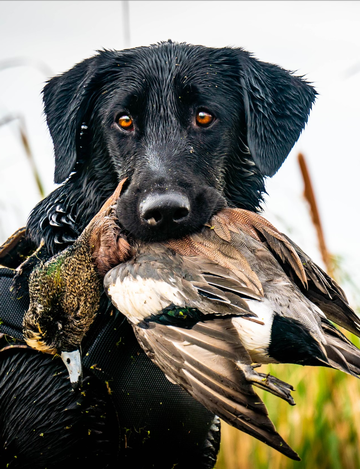
There is no reason, other than quid pro quo, for MNWR to periodically abandon their mission of protecting and preserving diversity of wildlife and their habitats in favor of a creating one exclusively for ducks. Waterfowl — ducks, geese, swans, rails, and coots — are neither threatened nor endangered, and there is no shortage of regional feeding/rest areas on the flyway. In fact, the Montezuma refuge lies adjacent to the extensive Seneca Lake marshes which, to my knowledge, are never drained or “refreshed” but manage to attract ducks nonetheless. There is absolutely no need for Montezuma to continue (over)using any duck-luring tactics — unless, of course, they wish to reward DU for its financial and in-kind contributions by providing a less-restricted and more populated duck-hunting experience than what is offered at the state-controlled Seneca Lake.
So, why do they do it? Why do they consistently violate public trust by performing the wildlife equivalent of mass murder, just to please a few duck hunters? Oh, that’s an easy one. They do it because they can.
According to federal and state regulations as well as USFWS guidelines (yes, the same USFWS that co-manages MNWR), individual hunters are subject to fines and/or license suspension should they be caught baiting wildlife. That’s why hunting is prohibited on “manipulated” (planted and harvested) land as long as bait — grain or seed — remains on the ground (USFWS regulations specifically mention cornfields, since the post harvest litter could — and does — attract foraging wildlife). That’s also why DU (and other) hunters avoid Savannah’s agricultural mucklands bordering the Seneca River. Instead, they hold their “magnificent muck duck hunts” (their words, not mine) just a few miles away at MNWR, whose endeavors ensure expansive, huntable mucklands of their own (something that isn’t philosophically possible at INWR — you know, that whole “diversity of wildlife habitats” thing).
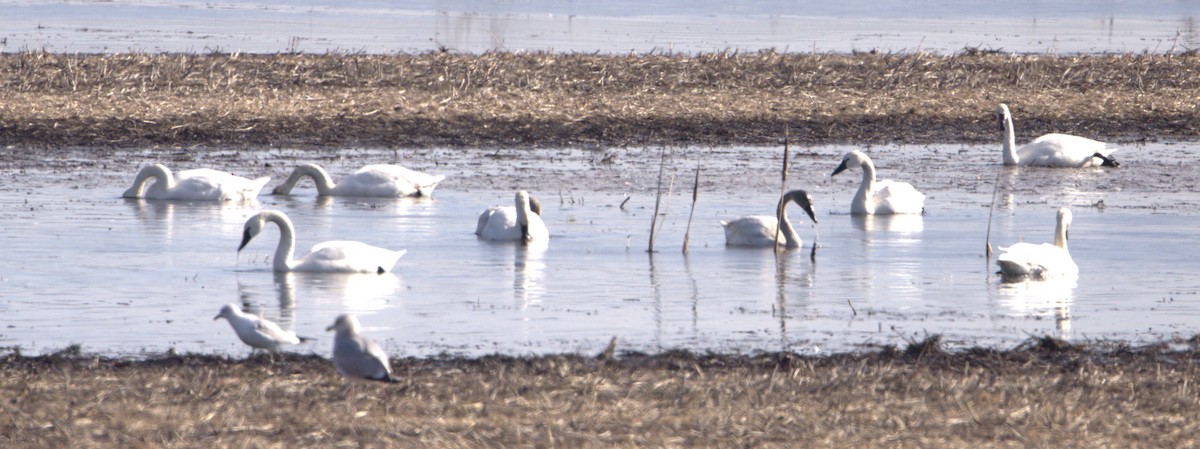
And it’s all very legal. One would think that MNWR’s muddy duck-food garden would guarantee a hunt-free environment, no? Because the USFWS regulates “wildlife food plots” as carefully as they do farmland, right? WRONG, because they’ve stuck this exemption right in the middle of all the restrictions and prohibitions listed in their guidelines:
“If you restore and manage wetlands as habitat for waterfowl and other migratory birds, you can manipulate the natural vegetation in these areas and make them available for hunting.”
The Migratory Bird Treaty Act (16 U.S.C. §§ 703–712) protects migratory birds, including migratory ducks, from being killed, sold, hunted, taken, or captured. Even collecting cast-off feathers is illegal without a permit — but it’s OK to shoot them as long as you do it at MNWR.
Kind of skews the entire meaning of the word “refuge,” doesn’t it, luring animals to rest and feed, only to sneak up, shoot them, and throw them in a boat. Having attracted them to a refuge. With bait.
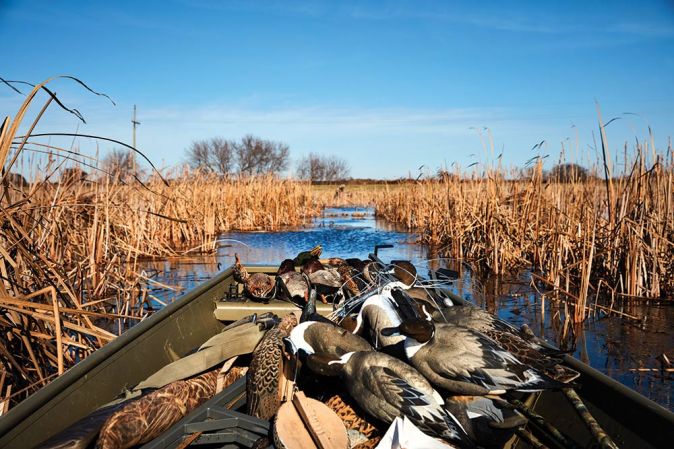
“BAM! Right between the eyes!” — Marisa Tomei (My Cousin Vinny, 1992).
I don’t financially subsidize MNWR and I rarely visit there anymore since I don’t much enjoy witnessing the effects of poor wetlands management. Pleasanter opportunities await elsewhere, especially along the backroads. These wetlands are smaller and subject to the whims of weather but never require “refreshment” beyond that supplied by nature — and even when nature fails they manage to attract all sorts of wildlife, including ducks. Who knew!
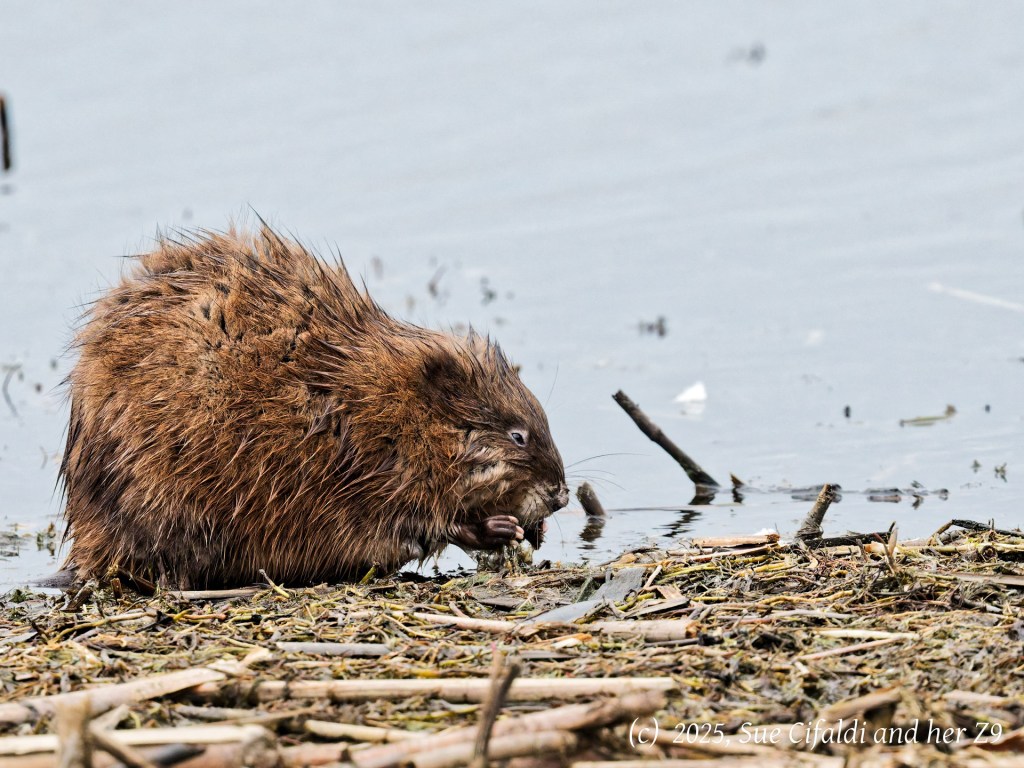


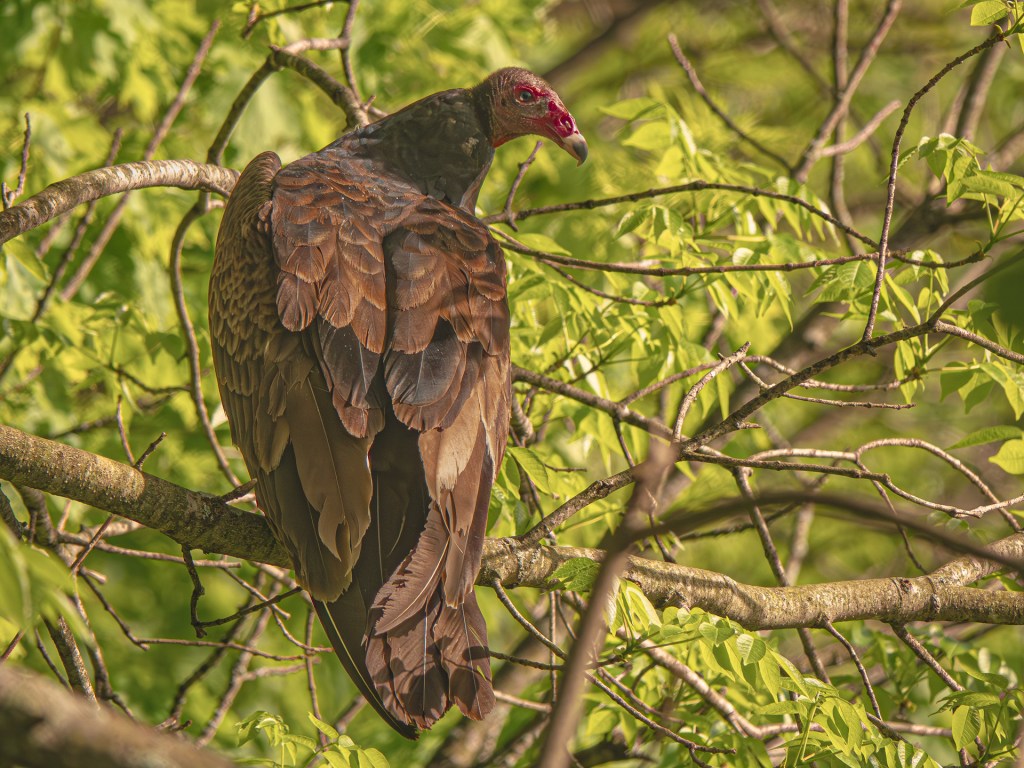
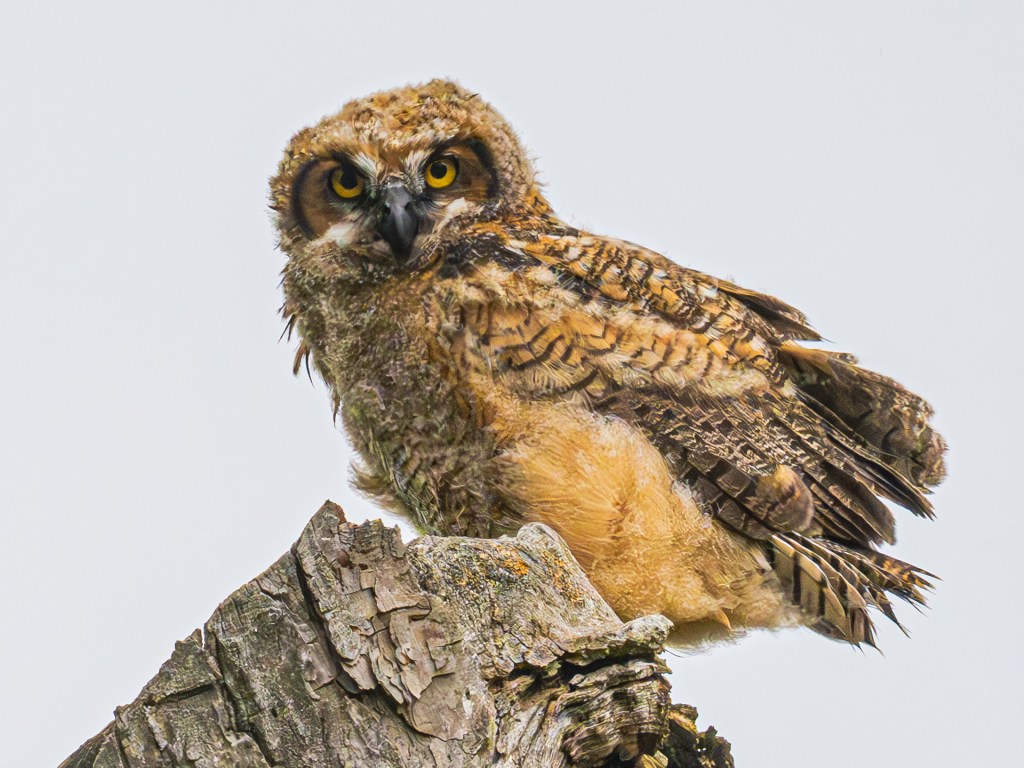
I must confess, though. Recently I myself was lured to MNWR by an intriguing Facebook photo. It showed two cars stopped on the Drive and an MNWR representative scolding at least one of the drivers. Apparently someone had lingered beyond the allotted 5 minutes and/or was observed getting out of their car in an effort to photograph the resident owl family. Such conduct stresses the birds and “ruins it for everybody,” according to the post. Laughed out loud at that one, because said employee was neither confined to a car nor constrained to a 5-minute-or-less tirade while her colleague dutifully and digitally preserved the egregious visitor conduct as some sort of evidence.
Besides, how stressed do they think the birds get when MNWR employees watch animals die as they intentionally collapse the food web by draining the marshes? Asking for a friend.

FWIW, I knew about this owl but had avoided looking for it because it would be too stressful — for me (I don’t do well with glaring looks and sanctimonious verbal assaults). Besides, I already have (stress-free) photos of the great horned owl family that nested at Sterling Nature Center a couple of years ago. At Braddock Bay, where staff and volunteers assist visitors with advice and guided hikes, I photo’d some saw-whets napping high up in a pine tree. (They don’t call it Owl Woods for nothing!) BTW, Hawk Creek routinely offers educational programs and, for a small fee, photo walks as part of their outreach.
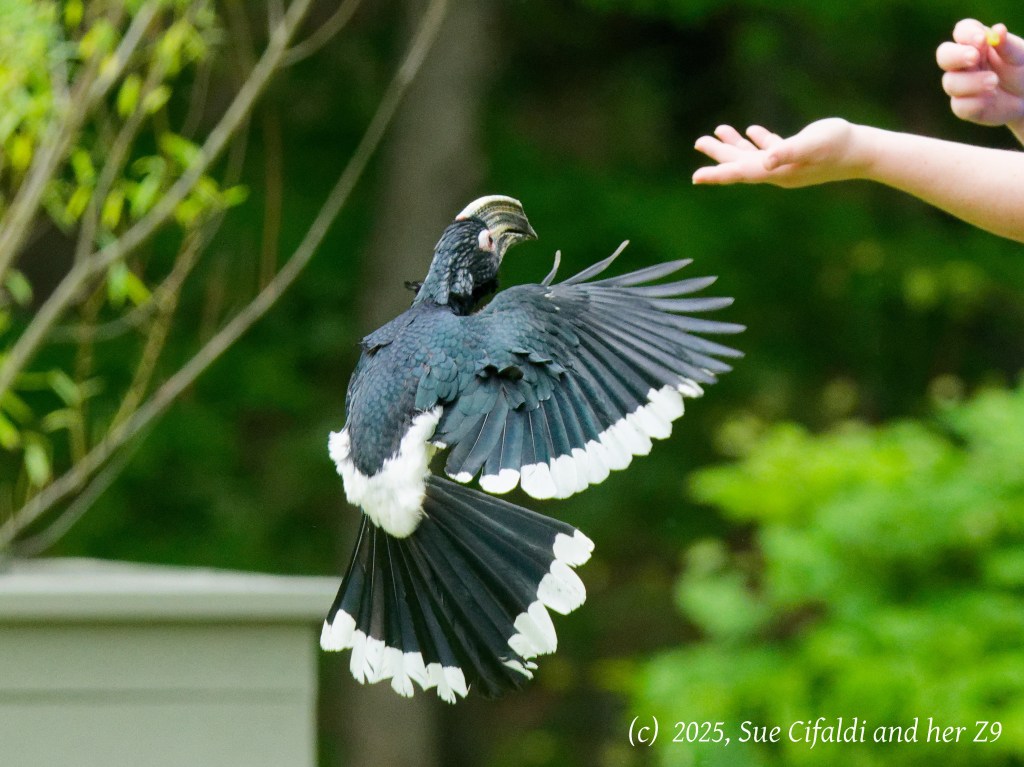
I mentioned all this in my reply to the FB post, further noting that MNWR’s owl chose to nest proximate to Wildlife Drive because her maternal instincts deemed it safe to do so despite the moderate traffic and occasional photographer, neither of which has caused her to abandon her family or move it elsewhere. So, I wonder just who is stressed by such flagrant disobedience — is it the owl or the rep?

In any event, it took about 10 minutes to get that photo (above) plus several others, and the owl never even flinched. In fact, it was still there about an hour later, when I went around the Drive a second time. (Note, no birds or MNWR reps were stressed during this process.)
Of course, MNWR doesn’t care about any of this. My writing is a minor annoyance that hardly interferes with the photographers, weekenders, home schoolers, sightseers, and unleashed dogs who “don’t believe [their] lyin’ eyes” and spend both time and money supporting a “refuge” that kills its own animals. Go figure.
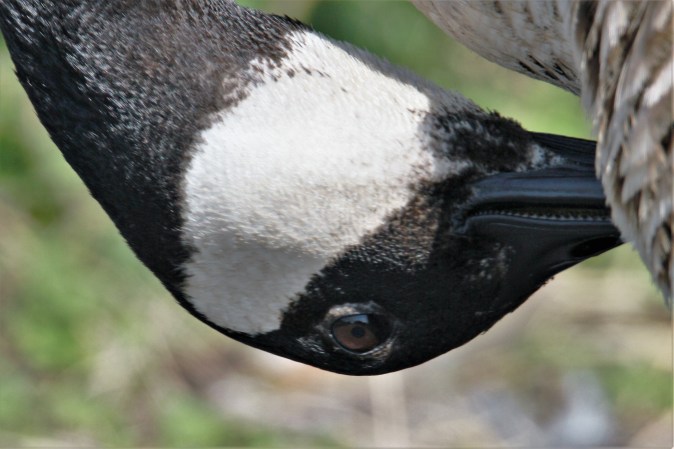
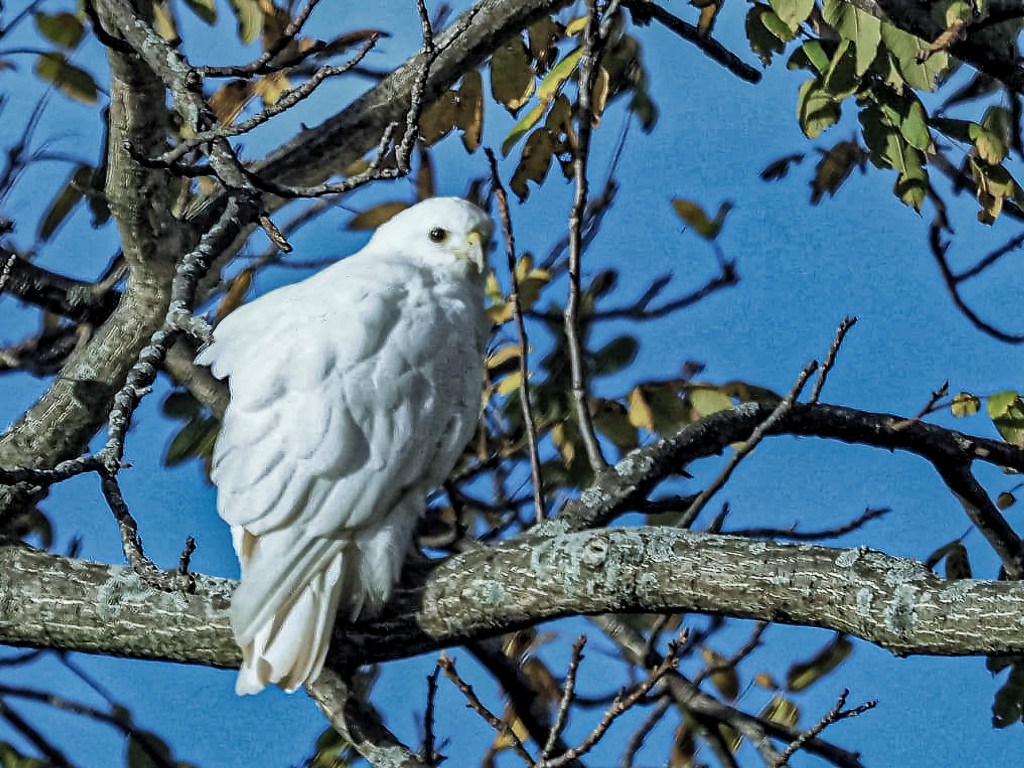
who monitors the MNWR Friends FB page but who never did figure out
that I had directed him to an Amish egg farmer
and not the leucistic hawk
(published May 19, 2025, reviewed February 14, 2026)
 Seen by Susan: Fun with Flora and Fauna
Recent Comments