
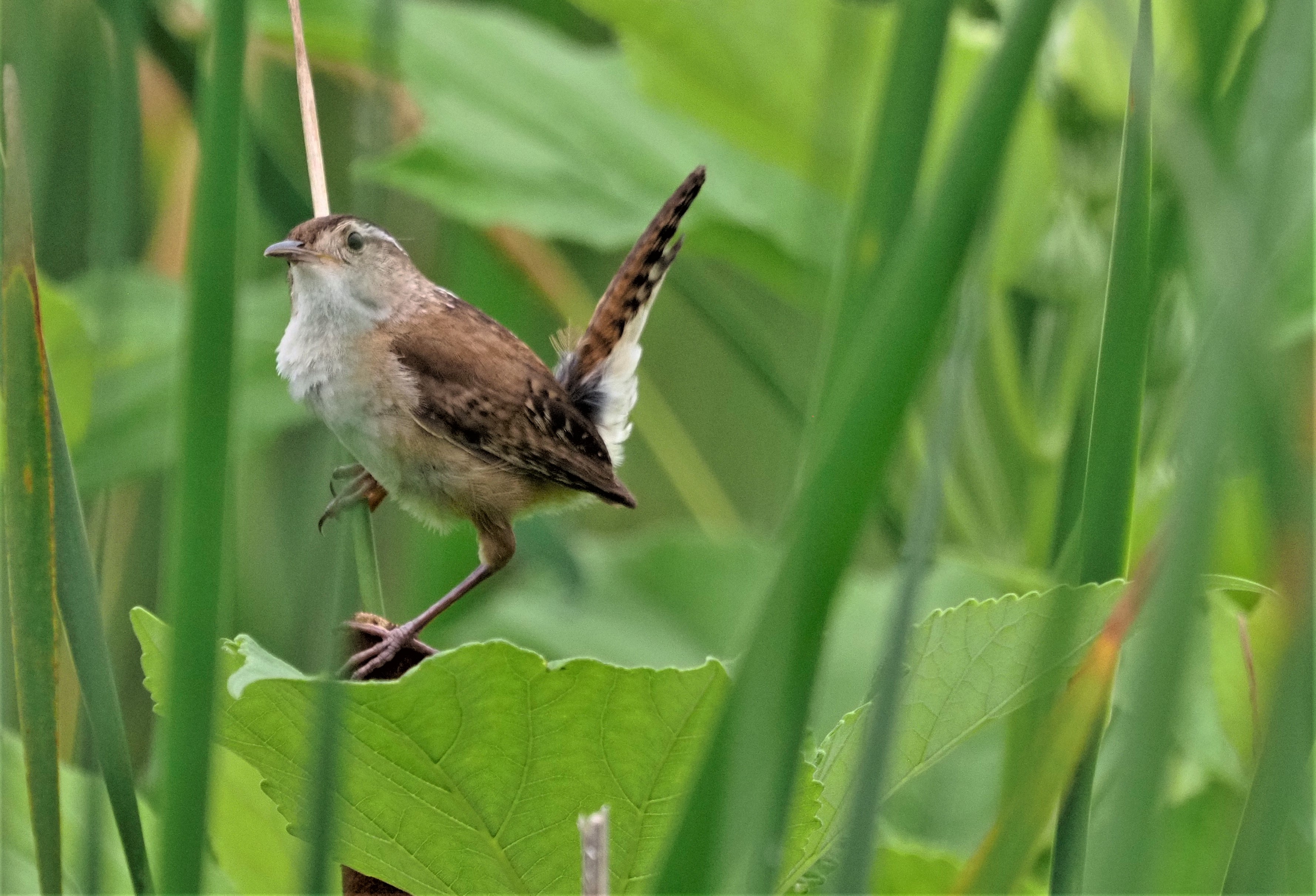
You can hear them in the cattails, but they are very hard to see.
That’s because they don’t sit at the top, like the song sparrows do; they much prefer to hide at mid-level, where the greenery is at its thickest.
So, get familiar with manual focus, because autofocus will fail miserably.
Its will struggle for a while and then settle on the nearest subject. So instead of getting an in-focus marsh wren, you will get a fuzzy one perched upon some nice, crisp stems.

Just a little tip from a newbie who learns the hard way 🙂
Marsh wrens have no distinctive coloring, like the redwings do. Their muted brown colors blend in with the rush thickets.
They really like to hide!
But get too close to a nest, and these tiny, drab-colored birds will rattle up a storm of protests!
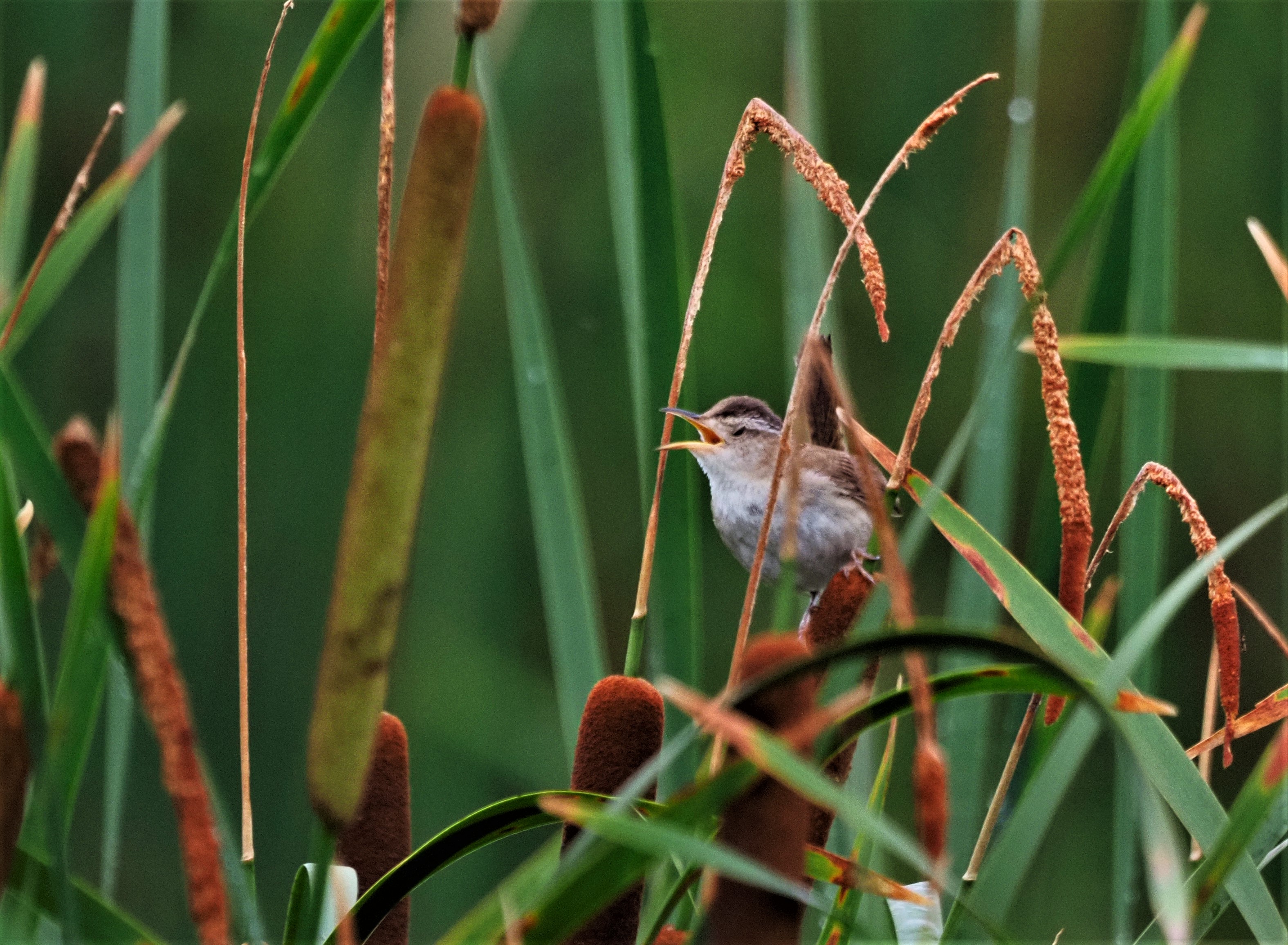
There are lots of small, drab-colored birds that hang around marshes, but there are a couple of features will distinguish the marsh wren from the others.
Like, their rattly calls. And their tails, which they stick almost straight up in the air.
They are feisty birds, especially the males.
The males are not monogamous but will mate with two or more females. They not only build a nest, they will build lots of them.
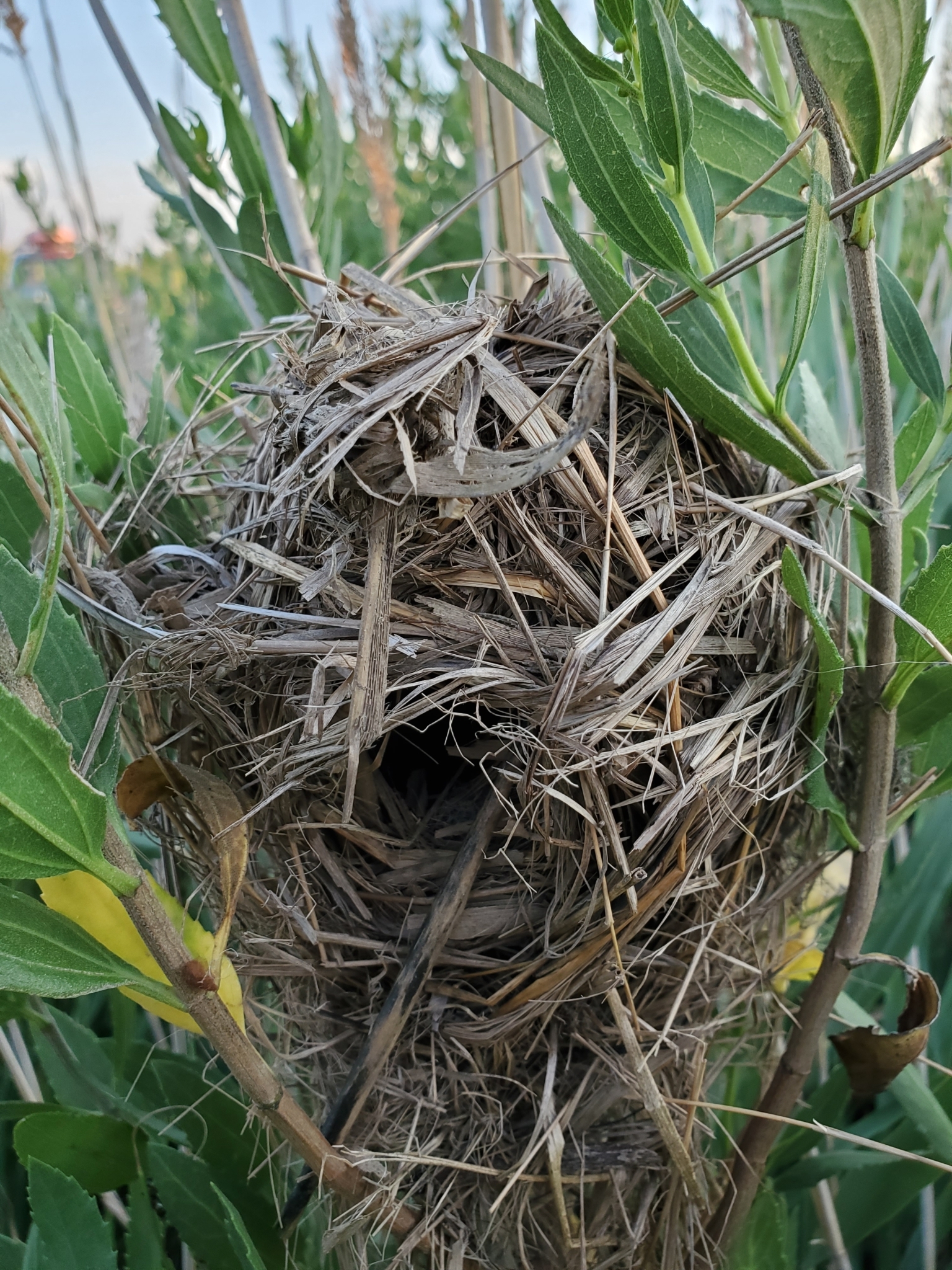
And they are quite territorial — the males are known to peck holes in the eggs of other birds as well as other marsh wrens.
So, it’s probably wise not to get on their bad side, especially if you live in a marsh.
(published July 12, 2021)


 Seen by Susan: Fun with Flora and Fauna
Beautiful photos! You’re so talented with that camera. ❤
LikeLike