by Susan

Is THIS why the managers at Montezuma National Wildlife Refuge drain the marshes every spring? And allow the resultant mudflats to lie fallow over the summer? And then flood them in late summer/early fall? To lure large quantities of ducks to the refuge with acres of duck-friendly vegetation? Just in time for fall migration?
Well, yes, that is what they tell us.
But what they don’t tell us is that fall migration coincides nicely with New York’s duck-hunting season. Because we aren’t supposed to know that they lure both ducks and duck hunters to the refuge with this clever plan.
This guy was parked on Wildlife Drive on Sunday, November 9, 2025, even though the Drive remains open to the public until December 1. It is my understanding that public access is why duck hunting is never allowed at the marshes bordering Wildlife Drive. . .but apparently I understand wrong. Evidently it’s allowed as long as no one from the Refuge staff is looking.

This entire debacle is unnecessary. While drainage does “refresh the marsh,” such refreshment is required only on those occasions when the regional weather cycle fails to provide natural drought –which occasionally happens during the more-or-less 5-7 year cycle. But even on those rare occasions when nature fails and the water table must be lowered, it needn’t be downdrained to mudflats, nor should it be drained more frequently than once within the 5-7 year cycle. In fact, too-frequent drainage, whether induced or natural, hastens the degradation of emergent wetlands, which will convert to a trees-and-shrubs environment in about 10 years, sometimes in as little as 2-3 — check elsewhere on this blog where I’ve written about the current conditions of Knox-Marcellus Marsh, the result of a prior failed “marsh improvement” endeavor conducted jointly by MNWR and Ducks Unlimited (don’t believe me? it’s engraved on a brass plaque stuck to the boulder in the parking area).
I suspect that this truck and its owner are evidence that the varied explanations MNWR offers for its periodic destruction of the food web, necessary to maintain the exclusionary waterfowl population they desire, are simply “alternate facts” designed to convince us that killing off the resident water dwellers and driving away dependent wildlife each (or nearly each) spring serves some kind of lofty environmental purpose. . .and that hunting is a byproduct of negligible importance.
It doesn’t (when it’s overused) and it isn’t (especially if you’re a duck).
This year’s “simulated drought” coincided with the natural one that affected central New York, so the refill, then, was much shallower than expected. A good thing for ducks, because they are less of a target when hidden in the proliferative unsubmerged vegetation. . .but that didn’t stop this guy. He was going to duck-hunt anyway.
According to one MNWR rep I recently spoke to, this year’s drainage was also intended to control invasive species, specifically invasive phragmites (a type of opportunistic reed grass). That, too, was an epic fail as far as Eaton Marsh is concerned — search elsewhere on this blog to see the photos.
Anyway, this year’s politics worked against the quid pro quo expected from MNWR by Ducks Unlimited. Mike (“The Little”) Johnson’s House shutdown and the bumbling, ineffective, and corrupt government that produced it inadvertently protected the wetlands from further harm by keeping marsh managers unpaid and therefore away from the dike controls. . .a small and short-lived benefit of the BBB <sigh>.
Their return won’t stop me, though, from trying to enjoy the little bits of wildlife that survived the destructive and disastrous summer of 2025:
Rarely do we find a feral muscovy duck in the wetlands, but I found one foraging disturbance-free at the Sandhill Crane Unit, where marsh managers are absent and water levels remain “unrefreshed.” In fact, even during this very dry summer, the water remained at wildlife-sustainable levels.

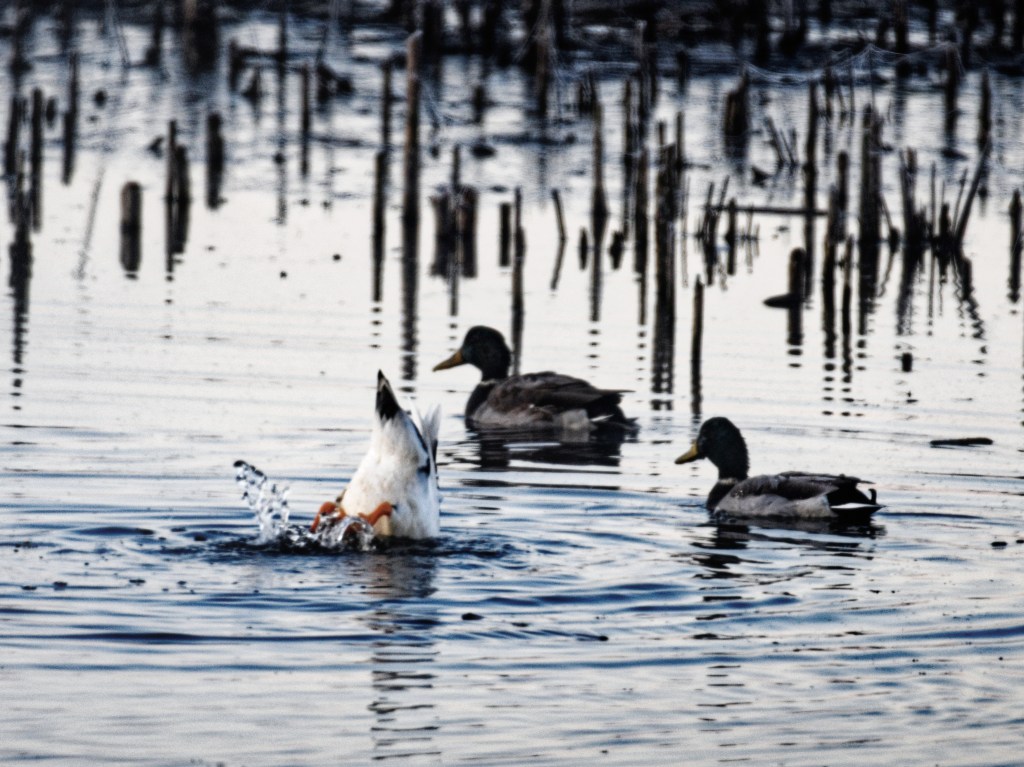
It was there until the hunters arrived, that is.
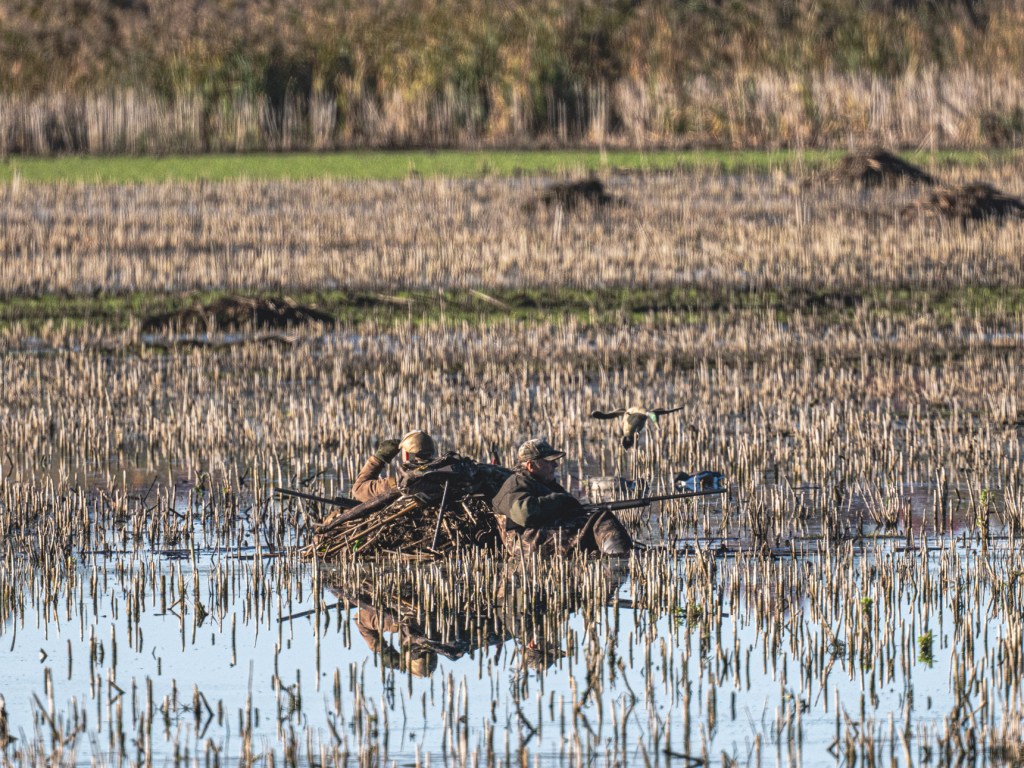
FWIW, hunting IS permitted on the PRIVATE LAND bordering the Sandhill Crane Unit, but it is NOT permitted on SCU land or in its marsh. Both the land and the marsh belong to the MNWR complex and are managed (and apparently ignored, thank goodness) by the cooperative efforts of the New York Department of Environmental Protection and the US Fish and Wildlife Service. So, if they won’t enforce their own regulations, I found a way to do it for them. Since sound carries easily over water, I had some good fun intermittently and unexpectedly sounding the horn. . .I did this several times while driving up and down the access road until either the ducks or the hunters scattered.
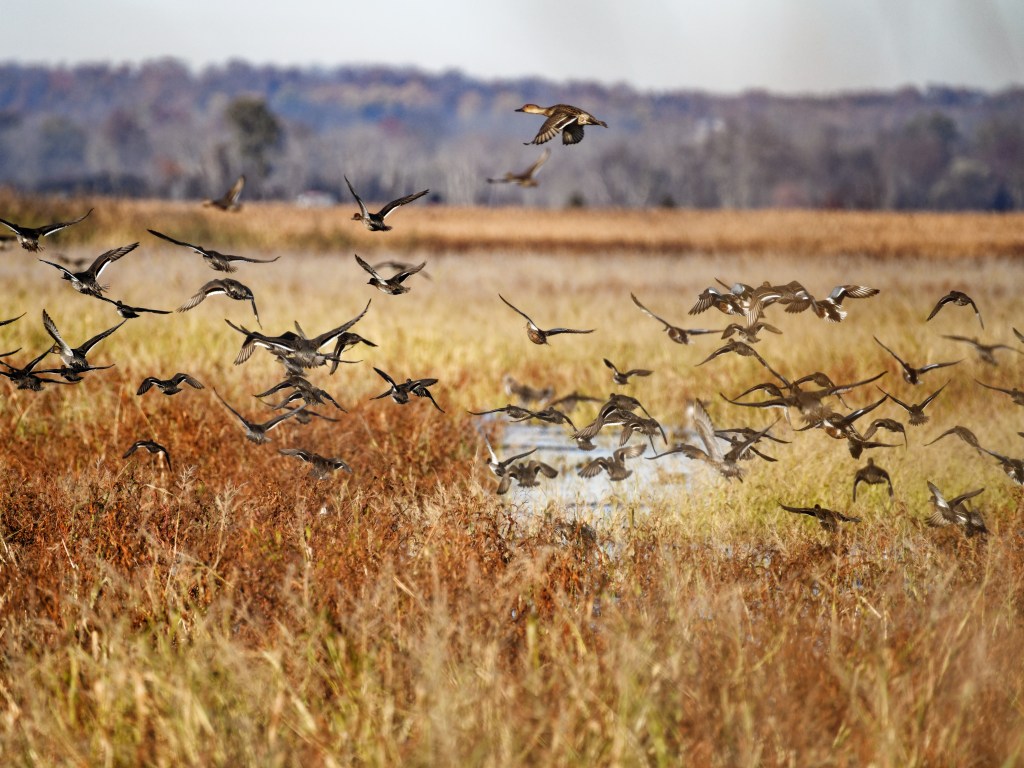
It’s one thing to hunt ducks — but it’s unnecessarily cruel to hunt ducks at a refuge. . .although trying to lure them with a whirl-a-gig painted like a Canada goose wasn’t very effective (that part was actually kinda funny).
In any event, wildlife aren’t stupid. They know there are safer habitats elsewhere.

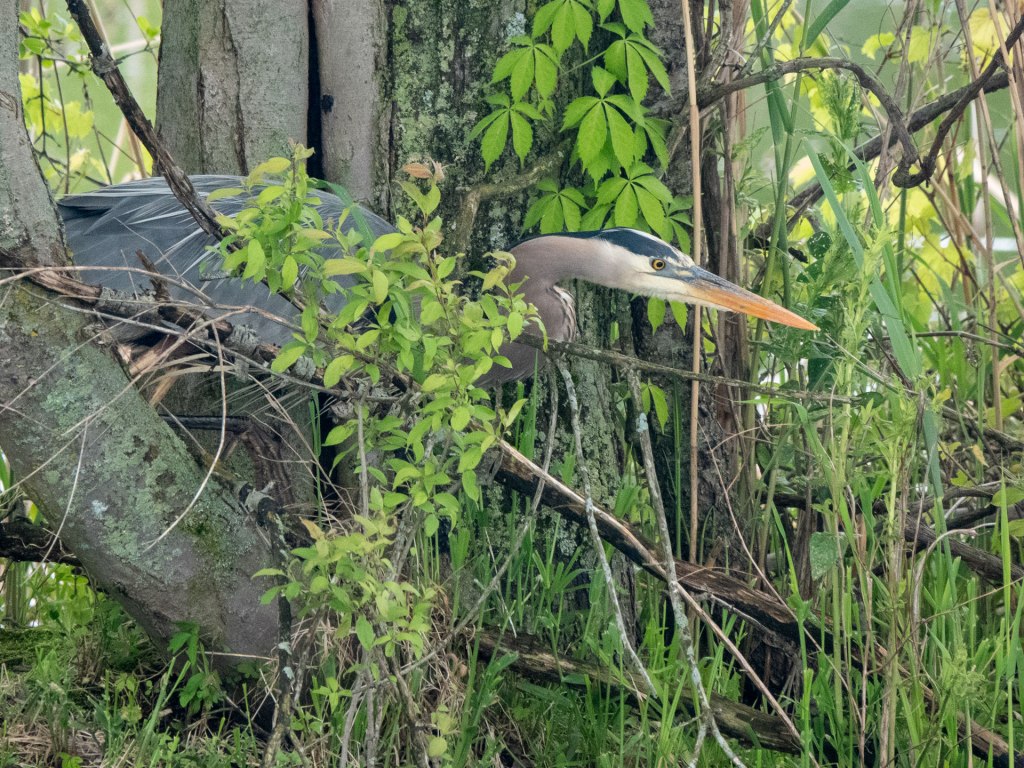
By the way, INWR itself doesn’t financially partner with Ducks Unlimited. Maybe that’s why they don’t bother to artificially increase their duck population. By not tampering with the natural food web, INWR attracts the full gamut of wildlife, not just ducks — something that apparently conflicts with the MNWR business plan.

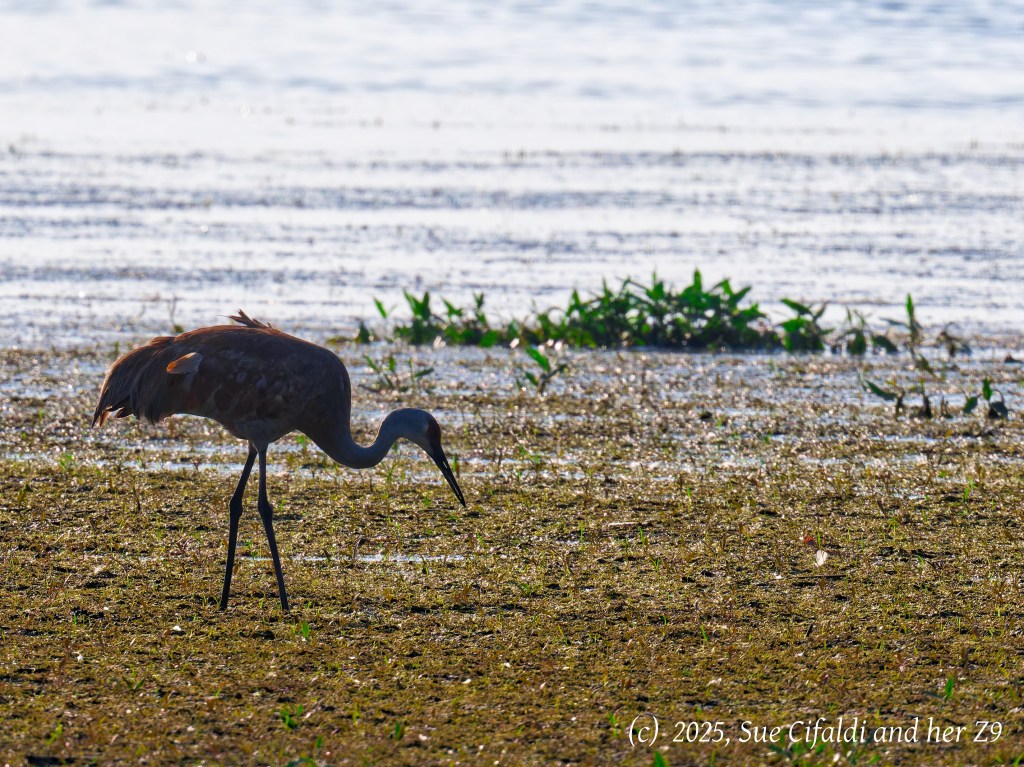
Hoping for better days next spring! Unfortunately, we’re stuck with the “magnificent muck duck hunts” sponsored by Ducks Unlimited until waterfowl season ends.

(published November 9, 2025)
 Seen by Susan: Fun with Flora and Fauna
Recent Comments